Planting Garlic in the Fall

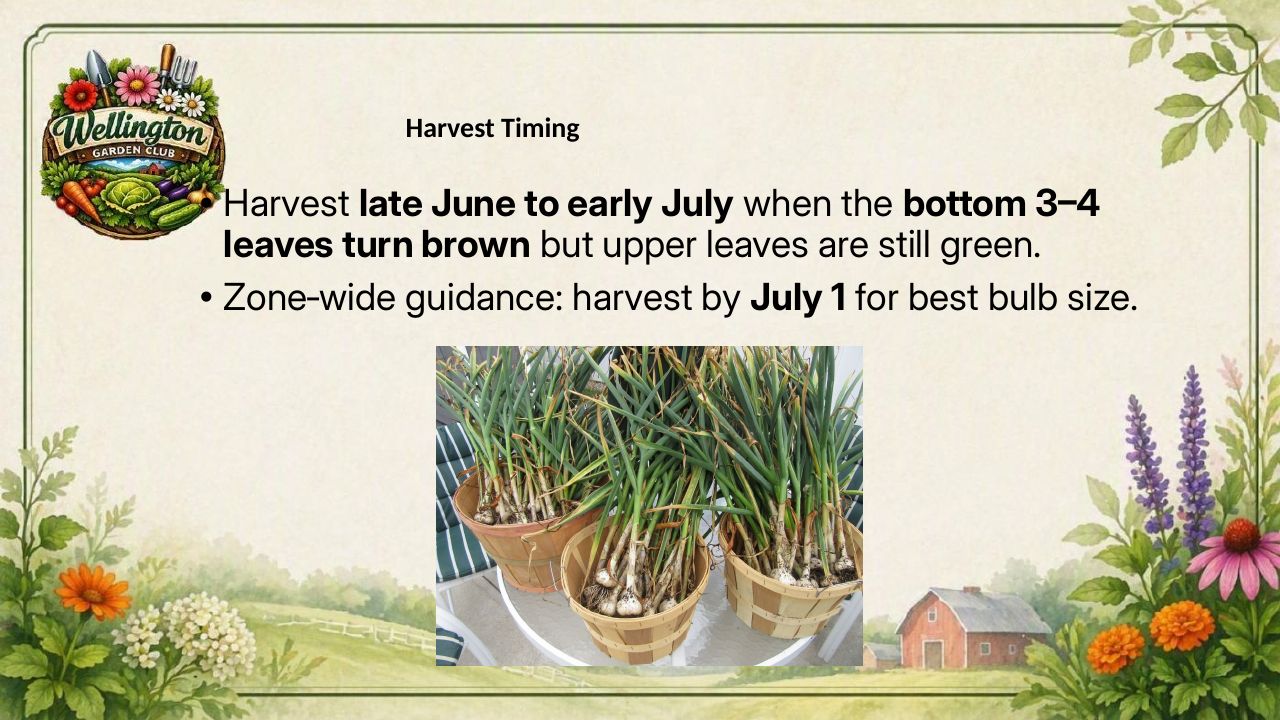
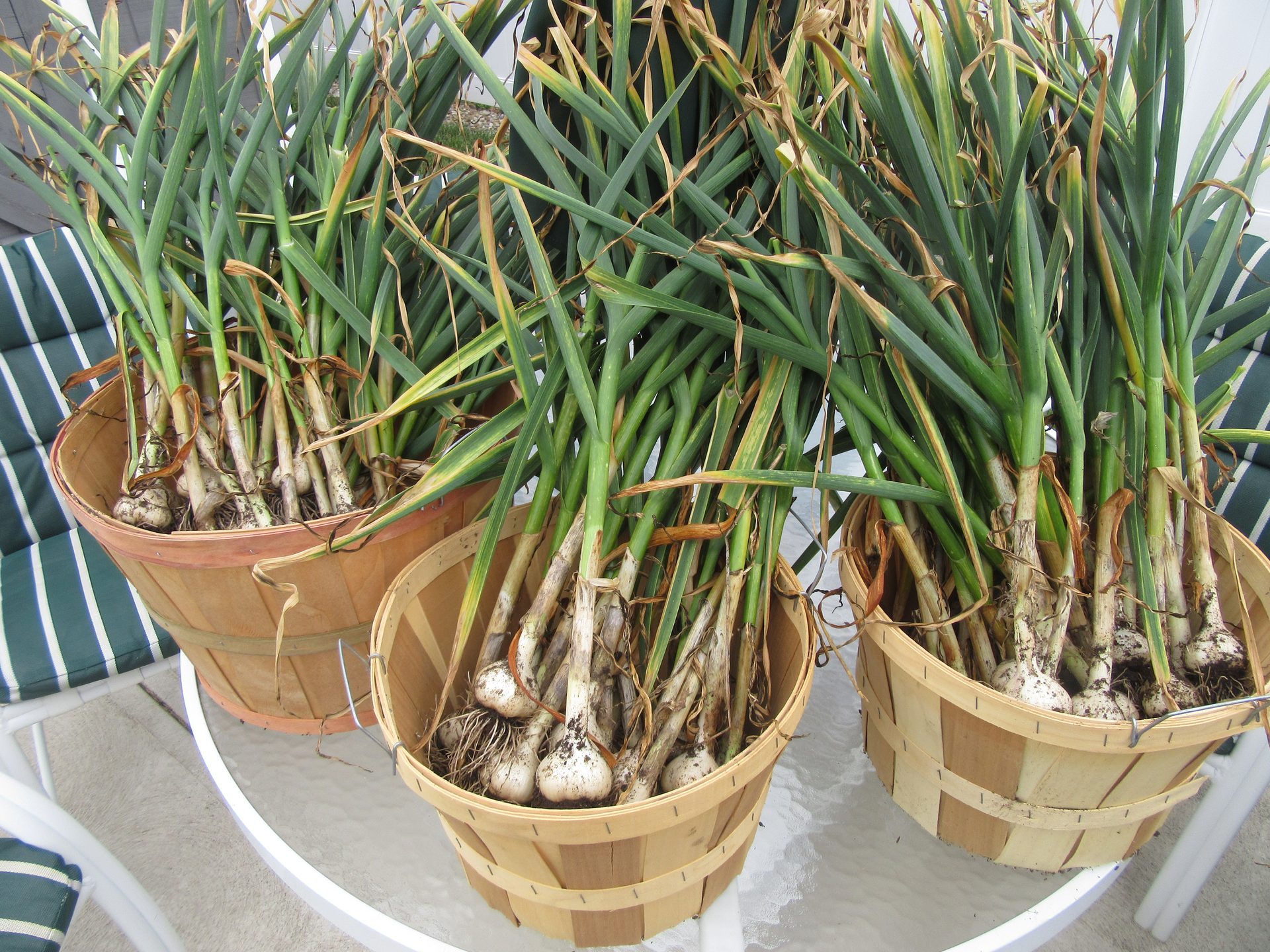
Baskets of freshly harvested garlic

Presented at the September 22, 2026 meeting: how to plant, grow, harvest and store garlic in Northeast Ohio.
Planting Garlic in the Fall slide 1
Planting Garlic in the Fall slide 1Planting Garlic in the Fall slide 2Planting Garlic in the Fall slide 3Planting Garlic in the Fall slide 4Planting Garlic in the Fall slide 5Planting Garlic in the Fall slide 6Planting Garlic in the Fall slide 7Planting Garlic in the Fall slide 8Planting Garlic in the Fall slide 9Planting Garlic in the Fall slide 10

Key points

  • Plant cloves from mid-October to early November, once the soil has cooled.
  • Hardneck types (Music, German Extra Hardy, Carpathian, Spanish Roja) do best in our cold winters; softnecks are milder and store longer.
  • Prepare well-drained soil with compost; plant cloves pointed end up, 2 inches deep and 4 to 6 inches apart.
  • After the first hard freeze, mulch with 3 to 4 inches of straw to prevent heaving.
  • Remove hardneck scapes in late May to June, and harvest in late June to early July when the bottom 3 to 4 leaves have browned.
  • Cure bulbs for 3 to 4 weeks in a warm, shaded, airy spot before storing.
Read all the slides as text

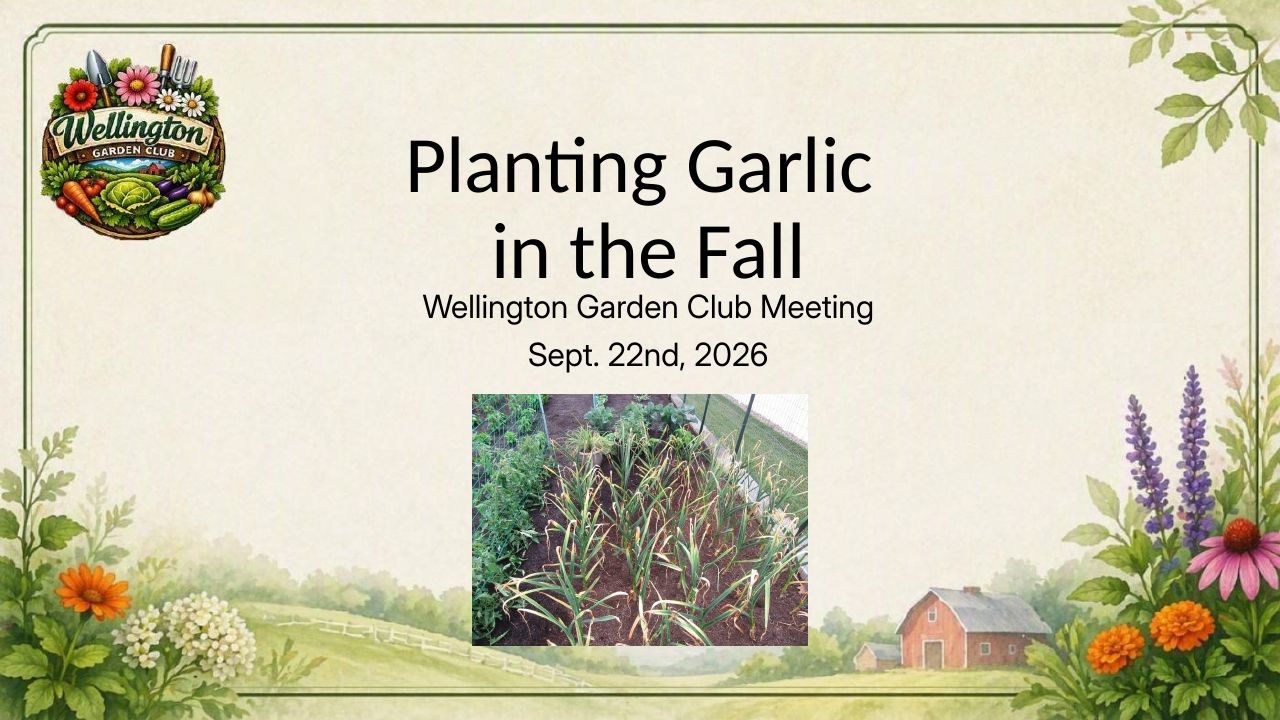
Slide 1: Planting Garlic

in the Fall

Wellington Garden Club Meeting

Sept. 22nd, 2026

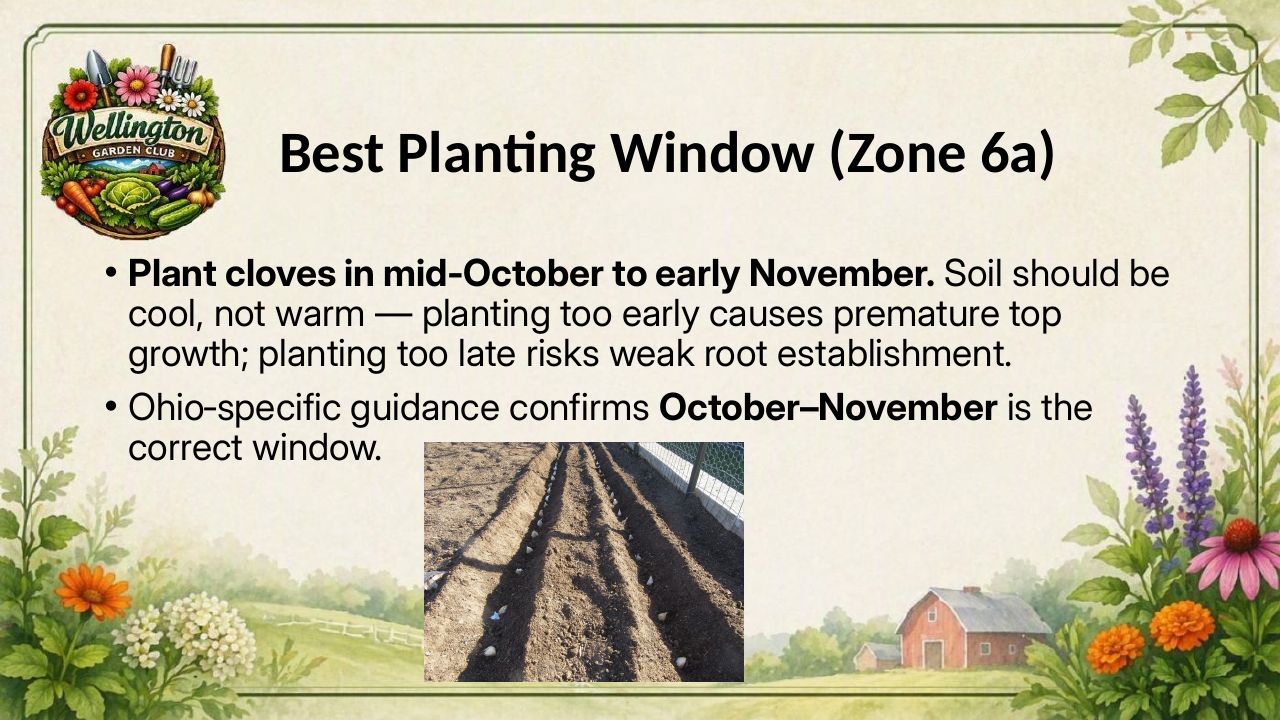
Slide 2: Best Planting Window (Zone 6a)

Plant cloves in mid‑October to early November. Soil should be cool, not warm — planting too early causes premature top growth; planting too late risks weak root establishment.

Ohio‑specific guidance confirms October–November is the correct window.

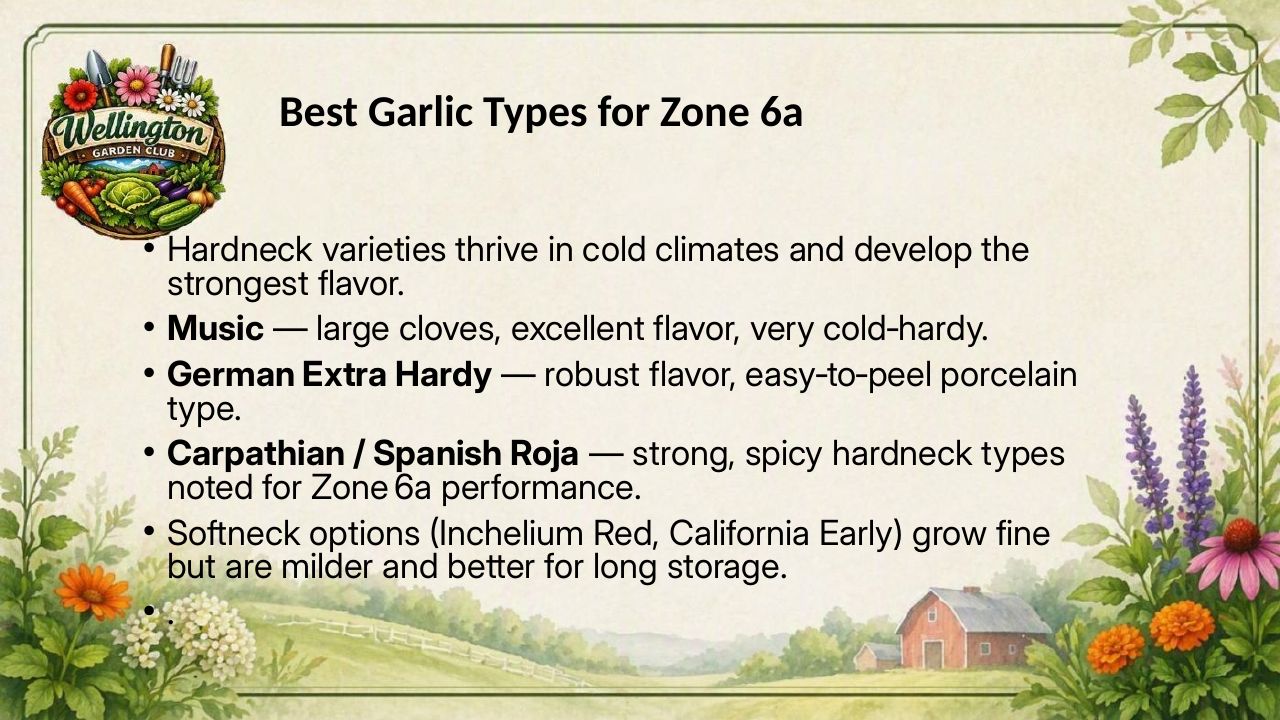
Slide 3: Best Garlic Types for Zone 6a

Hardneck varieties thrive in cold climates and develop the strongest flavor.

Music — large cloves, excellent flavor, very cold‑hardy.

German Extra Hardy — robust flavor, easy‑to‑peel porcelain type.

Carpathian / Spanish Roja — strong, spicy hardneck types noted for Zone 6a performance.

Softneck options (Inchelium Red, California Early) grow fine but are milder and better for long storage.

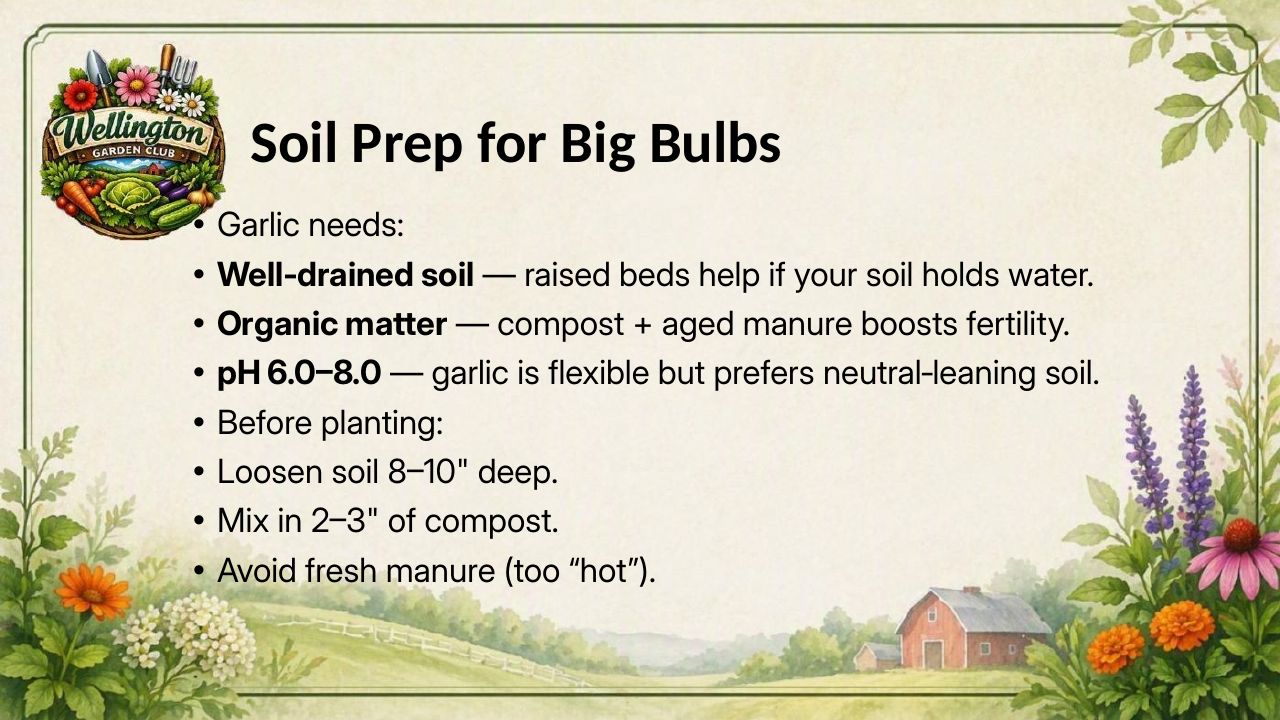
Slide 4: Soil Prep for Big Bulbs

Garlic needs:

Well‑drained soil — raised beds help if your soil holds water.

Organic matter — compost + aged manure boosts fertility.

pH 6.0–8.0 — garlic is flexible but prefers neutral‑leaning soil.

Before planting:

Loosen soil 8–10" deep.

Mix in 2–3" of compost.

Avoid fresh manure (too “hot”).

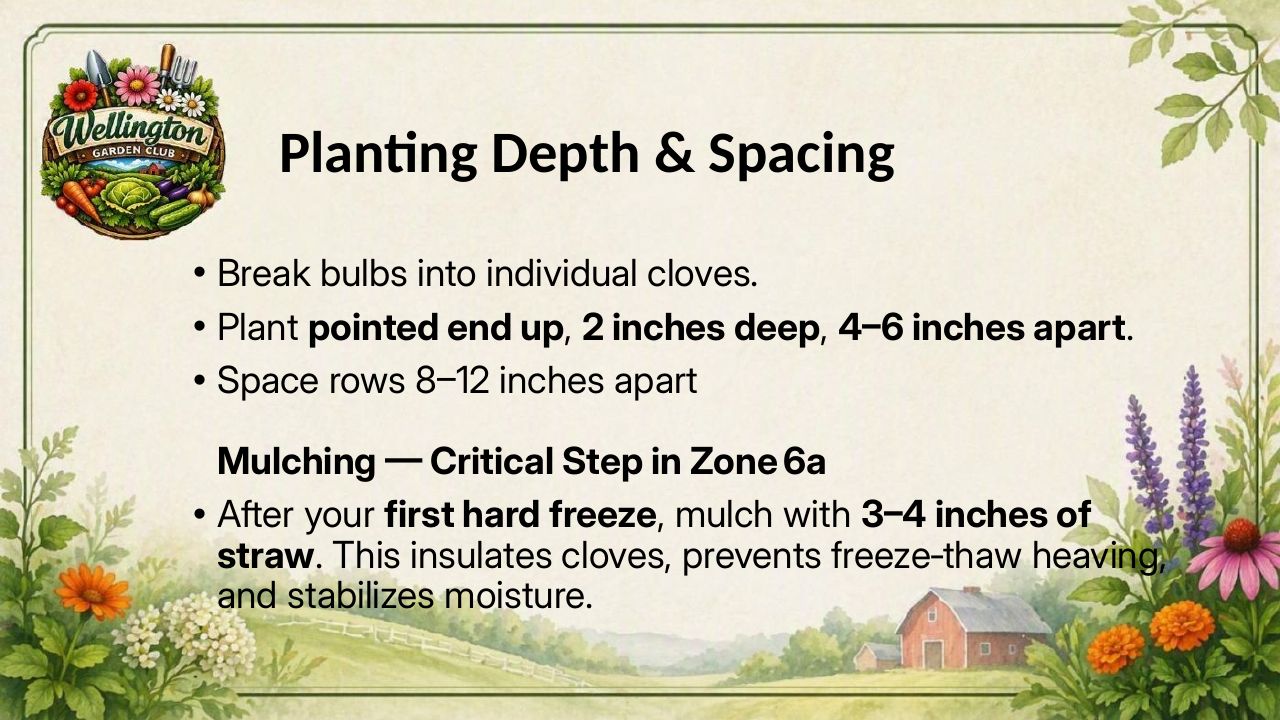
Slide 5: Planting Depth & Spacing

Break bulbs into individual cloves.

Plant pointed end up, 2 inches deep, 4–6 inches apart.

Space rows 8–12 inches apart

Mulching — Critical Step in Zone 6a

After your first hard freeze, mulch with 3–4 inches of straw. This insulates cloves, prevents freeze‑thaw heaving, and stabilizes moisture.

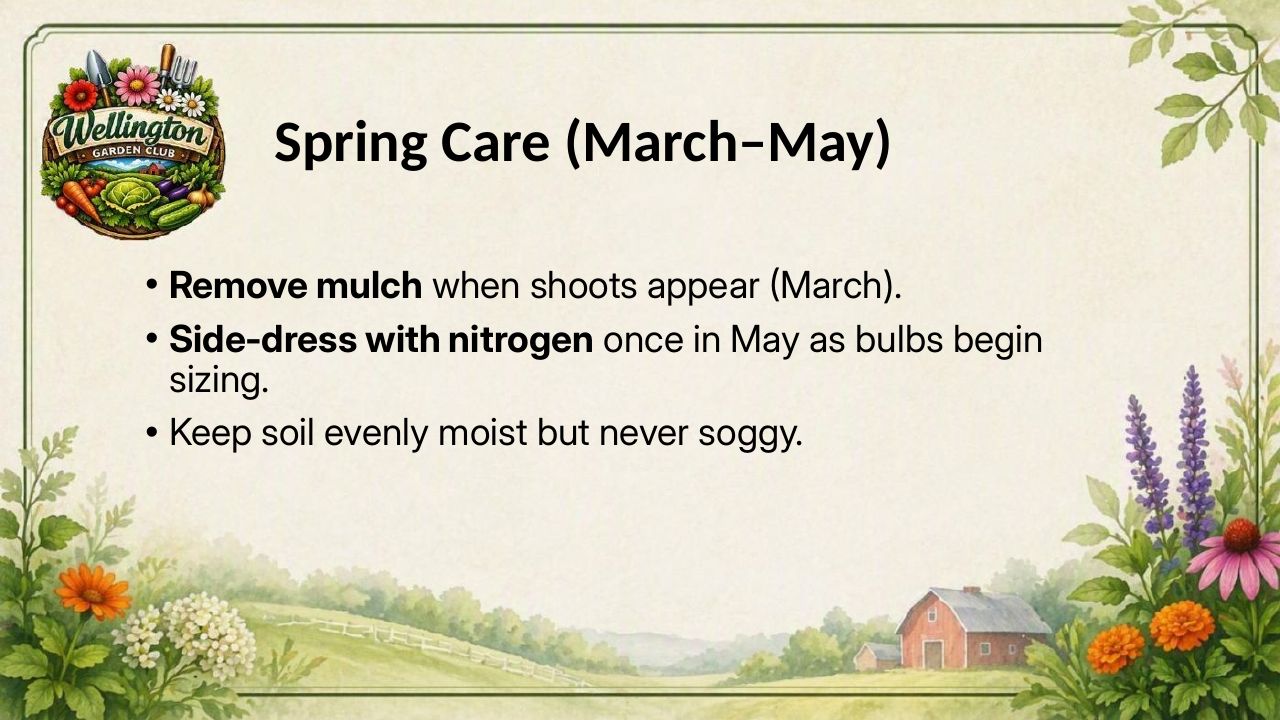
Slide 6: Spring Care (March–May)

Remove mulch when shoots appear (March).

Side‑dress with nitrogen once in May as bulbs begin sizing.

Keep soil evenly moist but never soggy.

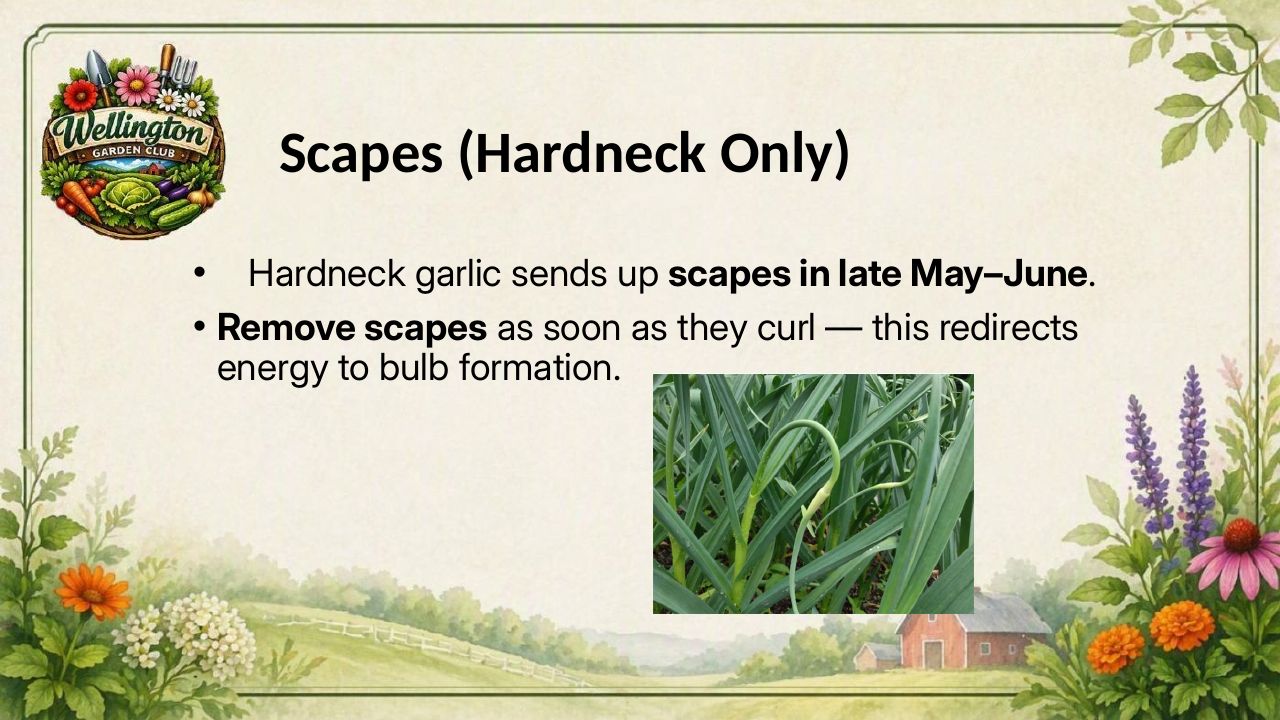
Slide 7: Scapes (Hardneck Only)

Hardneck garlic sends up scapes in late May–June.

Remove scapes as soon as they curl — this redirects energy to bulb formation.

Slide 8: Harvest Timing

Harvest late June to early July when the bottom 3–4 leaves turn brown but upper leaves are still green.

Zone‑wide guidance: harvest by July 1 for best bulb size.

Slide 9: Pests to Watch (Ohio‑Specific)

Thrips

White Rot Companion planting with tomatoes or roses helps deter pests.

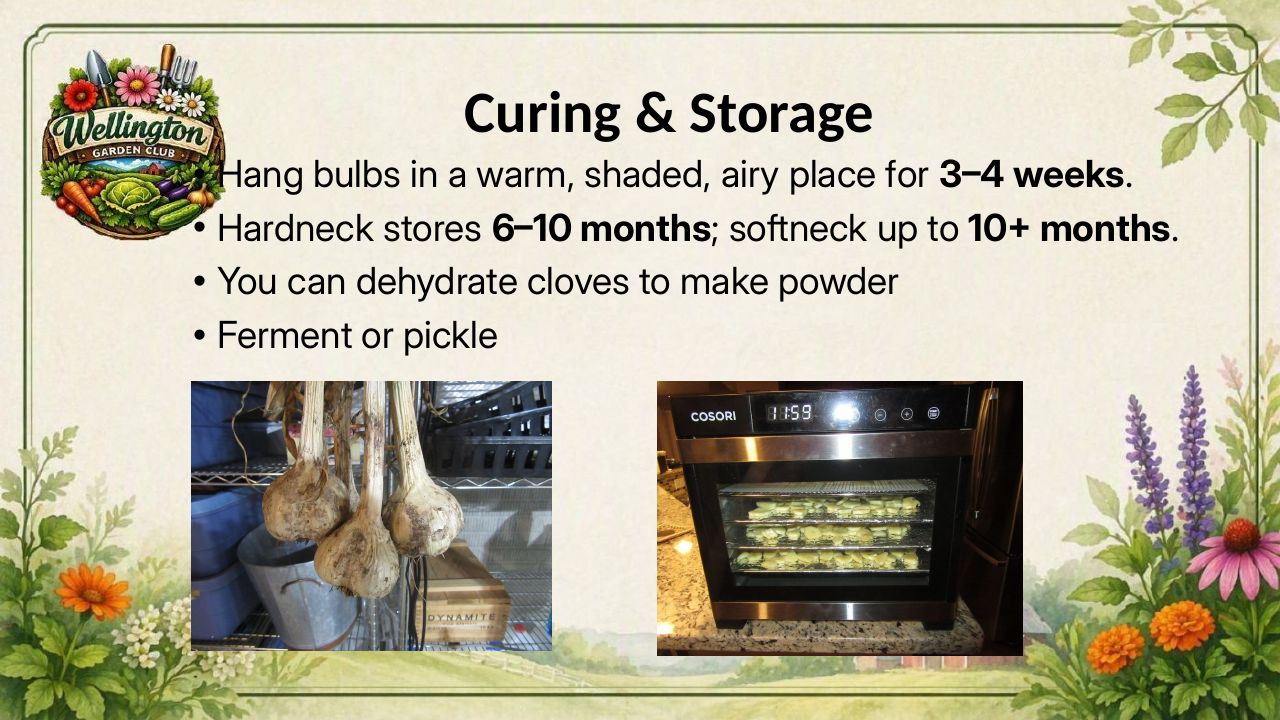
Slide 10: Curing & Storage

Hang bulbs in a warm, shaded, airy place for 3–4 weeks.

Hardneck stores 6–10 months; softneck up to 10+ months.

You can dehydrate cloves to make powder

Ferment or pickle

Download the slides