
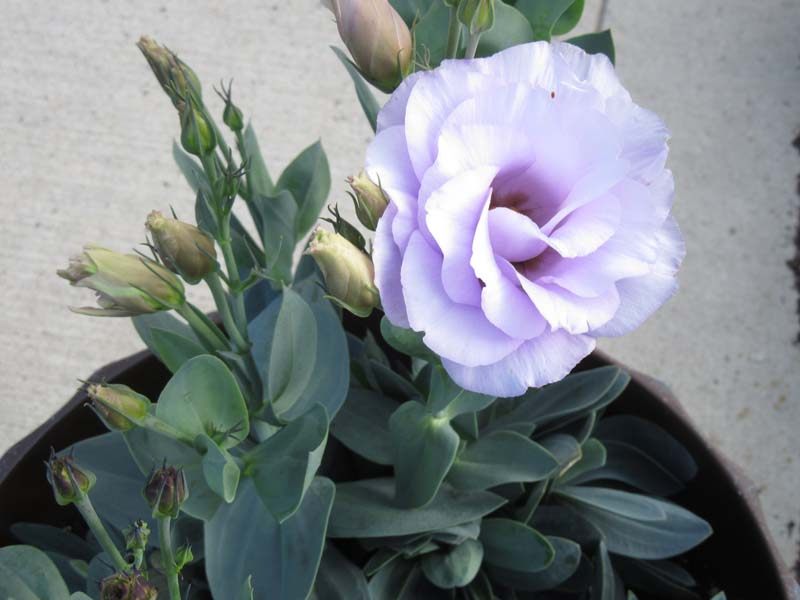
First off, I would like to say that I am no expert at growing Lisianthus, but I am learning more every year and have finally, after 5 years, had some success. Hands down my favorite flowers to grow, they are also the most challenging. I grow Lisianthus both from seed, and I also buy plugs (just as a backup).
I buy my plugs from Raker-Roberta’s plug and liner program through Harris Seed Company. I used to start the seeds in December, but am now starting them in mid January. There are not a ton of resources for seeds, but you might try Johnny’s Seeds. My new favorite place to buy them is Trailing Petunia. They have a huge variety of Lisianthus seeds. Their documentation is not that great, but they are a great value.
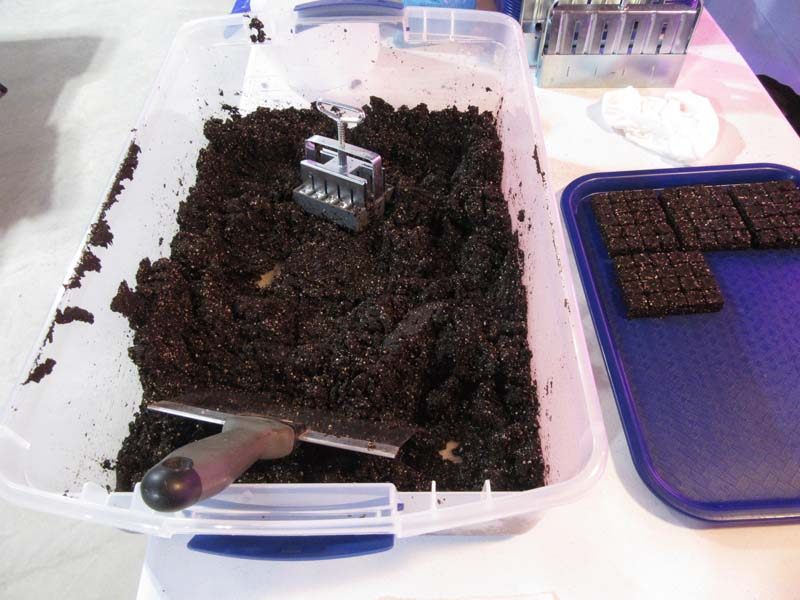
I usually order my Lisianthus seeds in mid to late October, and I enter all the varieties I purchased in a spreadsheet so I know from year to year what I have grown. Then when January rolls around I am ready to start planting. I start all of the seeds in 3/4 inch soil blocks with the soil blocker from Johnny’s Seeds (see picture below). I also use lunch trays to hold the soil blocks; I got them at Amazon.
Using soil blocks means no plastic trays. I always had trouble with the plastic because it is hard to tell if they are too wet or not. There are plenty of other reasons to soil block. If you want to learn more about it, please watch this video. It does a great job of explaining the why’s of soil blocking. I give them a dusting of cinnamon to keep down the algae growth.
The biggest lesson I learned this year is to watch the temperature. Everything I read said to use heat mats and cover with a humidity dome. Last year I discovered, by putting a thermometer on the table, that between the lights being only 3 inches away and using heat mats, the temperature was 90 degrees. Not good! So I raised my lights to about 10 inches away, took away the heat mats, and achieved a temperature of about 75 degrees. Even this is a little warm, but it really made a big difference. I got about 90% germination. I keep a thermometer on the tables to monitor the temperature.
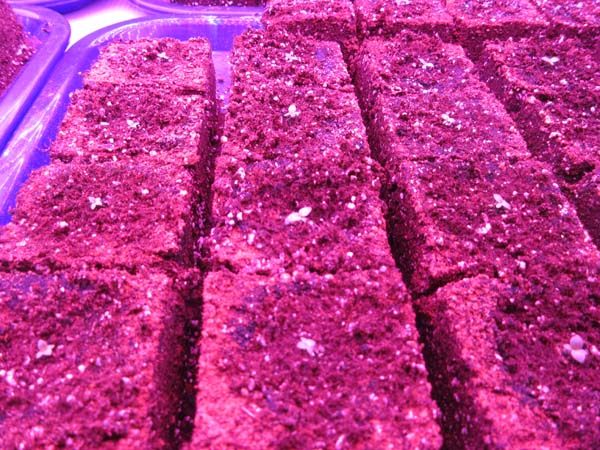
After making soil blocks, which have a small divot for the pelleted seed, I place one seed in each soil block. I bottom water and put a humidity dome over the top. It usually takes about 2 to 3 weeks to germinate. I keep an eye on the temperature to keep the flowers from rosetting. Rosetting is the inhibition of stem elongation, where the plant stays compact and fails to develop proper flower stems. Instead of growing upright, it forms a tight cluster of leaves—essentially stalling out. Keep the temperature down to avoid this. You can read more about it here.
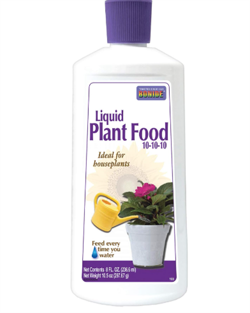
After your seedlings have a few full sets of leaves, it is time to start fertilizing. I have tried fish emulsion and others, but I have had the best luck with Bonide Houseplant Liquid Plant Food 10-10-10. I bought it at Amazon. I use it at every watering (about 2 times a week). It is very important to avoid overwatering; it makes it easy for algae to grow.
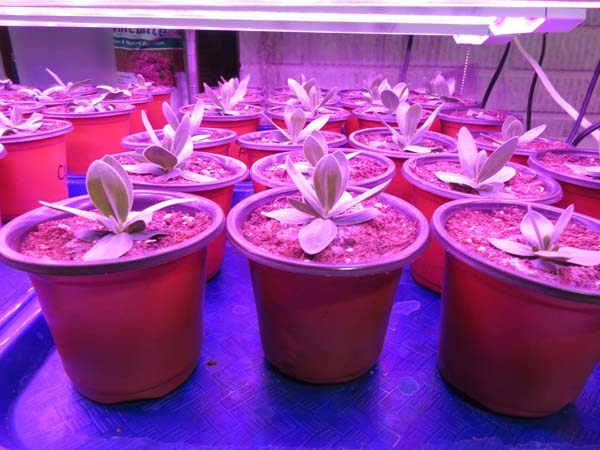
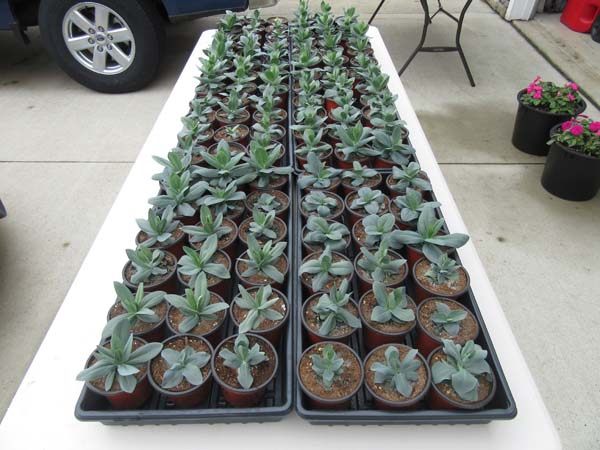
After several months, I felt they were getting too big for the 2 inch soil blocks they were in, so I transplanted them into these 3.5 inch pots. I got 16 per tray and 72 on each table I had the trays on (6 foot table). In 2026 I am going to try 2.5 inch pots, as I can get 20 on each tray rather than 16.
Come around May 1st, I start taking them outside to harden them off before putting them in the ground. To start, I take them out on cloudy days for about 2 hours for a few days, then 4 hours. Then on sunny days, a few hours the first day, gradually increasing the time until they are out a full sunny day. My wife and I also take them back into the garage every night. Then I am ready to plant once the last frost has passed.
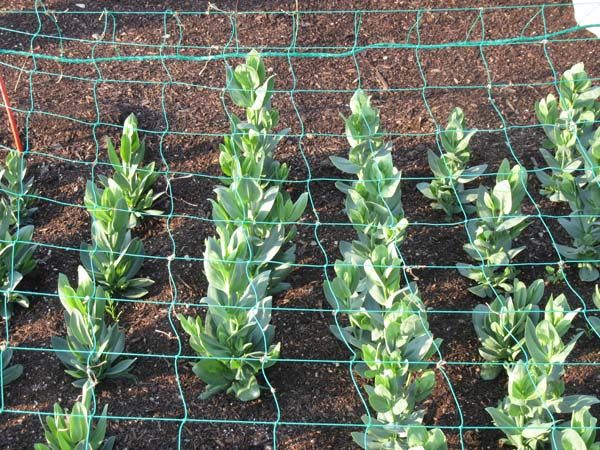

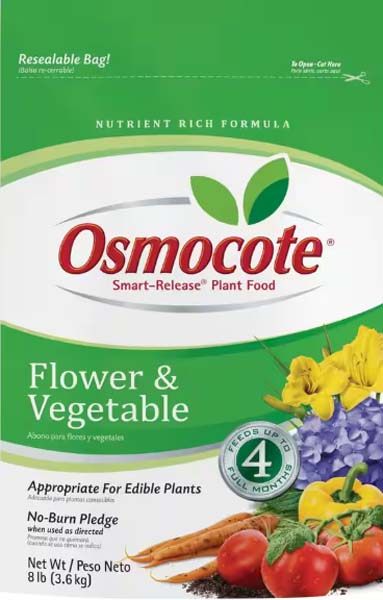
When planting, I dig a hole large enough for the plant to go in, and then I sprinkle a small amount of Osmocote 14-14-14. I use it for both my vegetables and flowers. I then put in fiberglass stakes to fasten the nets to using twist ties. In past years I got beautiful flowers, but they fell over. It is well worth the time to use the nets for support.
Now, as I said at the beginning of this article, I am no expert, but am just sharing what works for me. Hope this helps.