Planning Next Year’s Garden

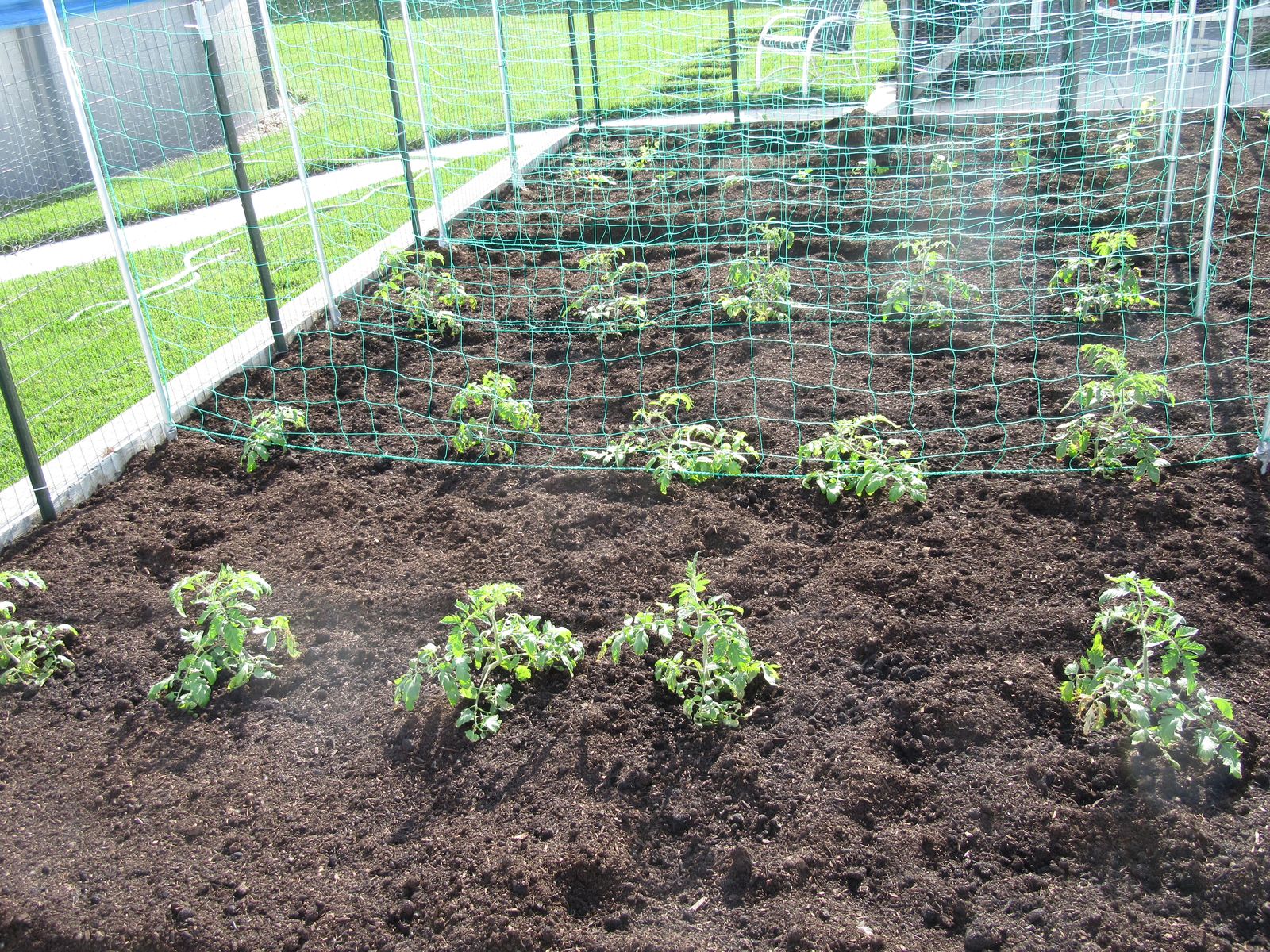
Vegetables grown by a Wellington Garden Club member

Presented at the November 17, 2026 meeting: how to use the off-season to plan next year’s garden for our Zone 6a conditions.
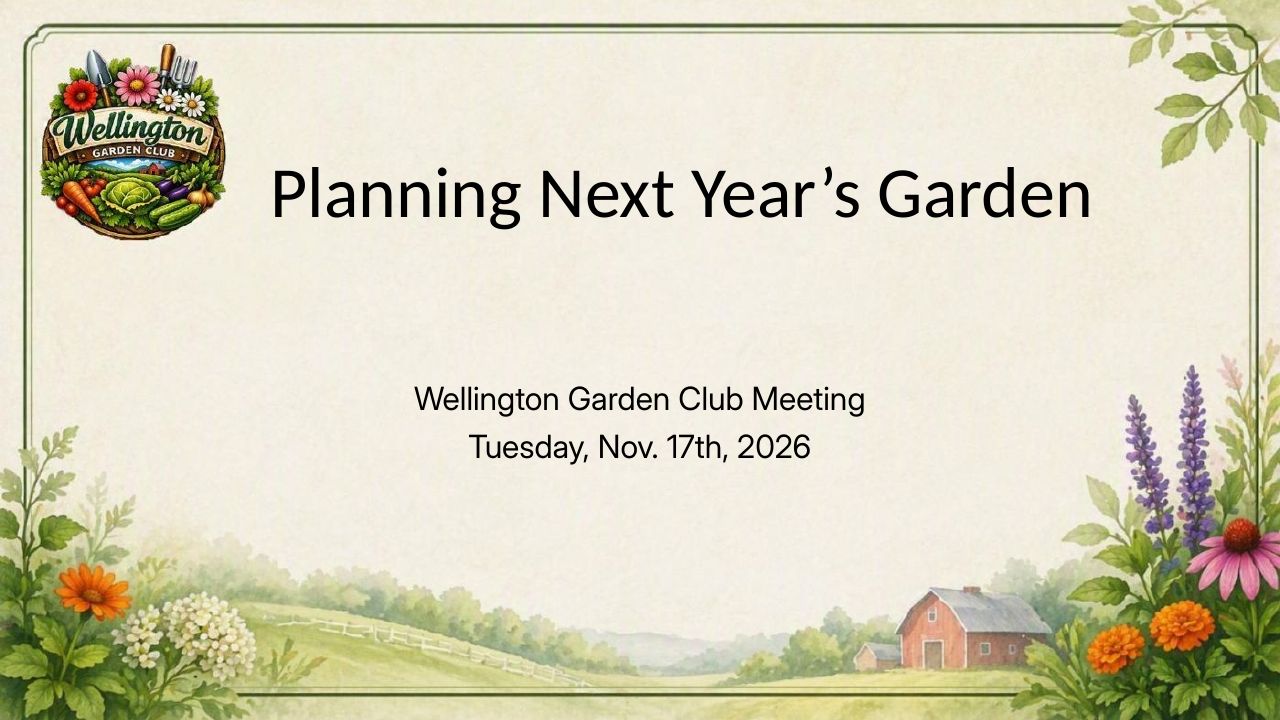
Planning Next Year’s Garden slide 1
Planning Next Year’s Garden slide 1Planning Next Year’s Garden slide 2Planning Next Year’s Garden slide 3Planning Next Year’s Garden slide 4

Key points

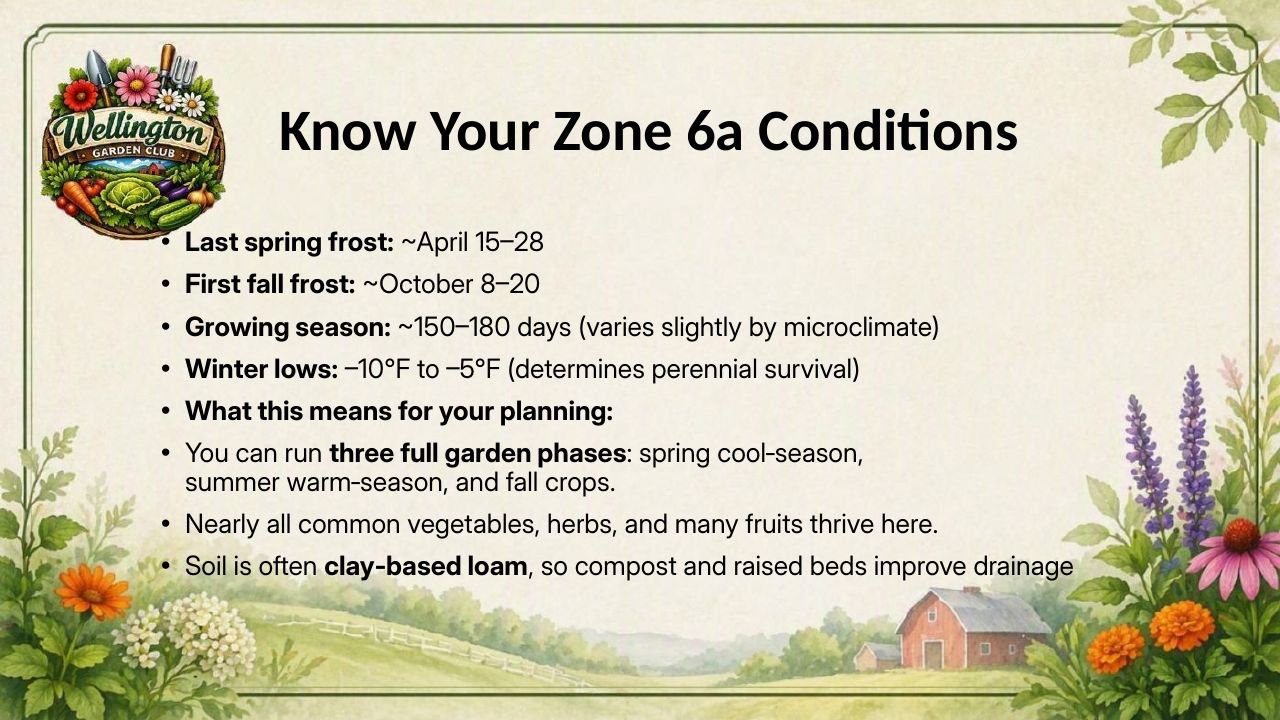
  • Zone 6a basics: last spring frost around April 15 to 28, first fall frost around October 8 to 20, and a 150 to 180 day growing season.
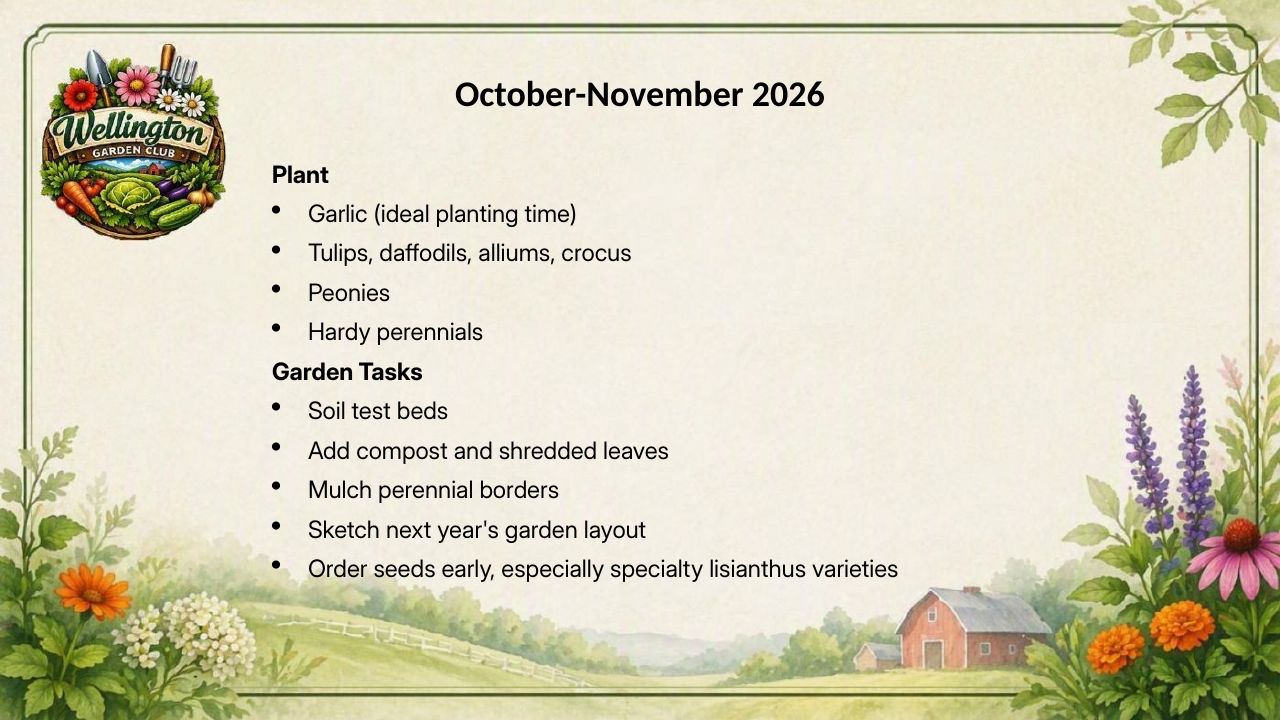
  • October and November: plant garlic, spring bulbs and peonies; soil test, add compost and shredded leaves, and mulch perennial borders.
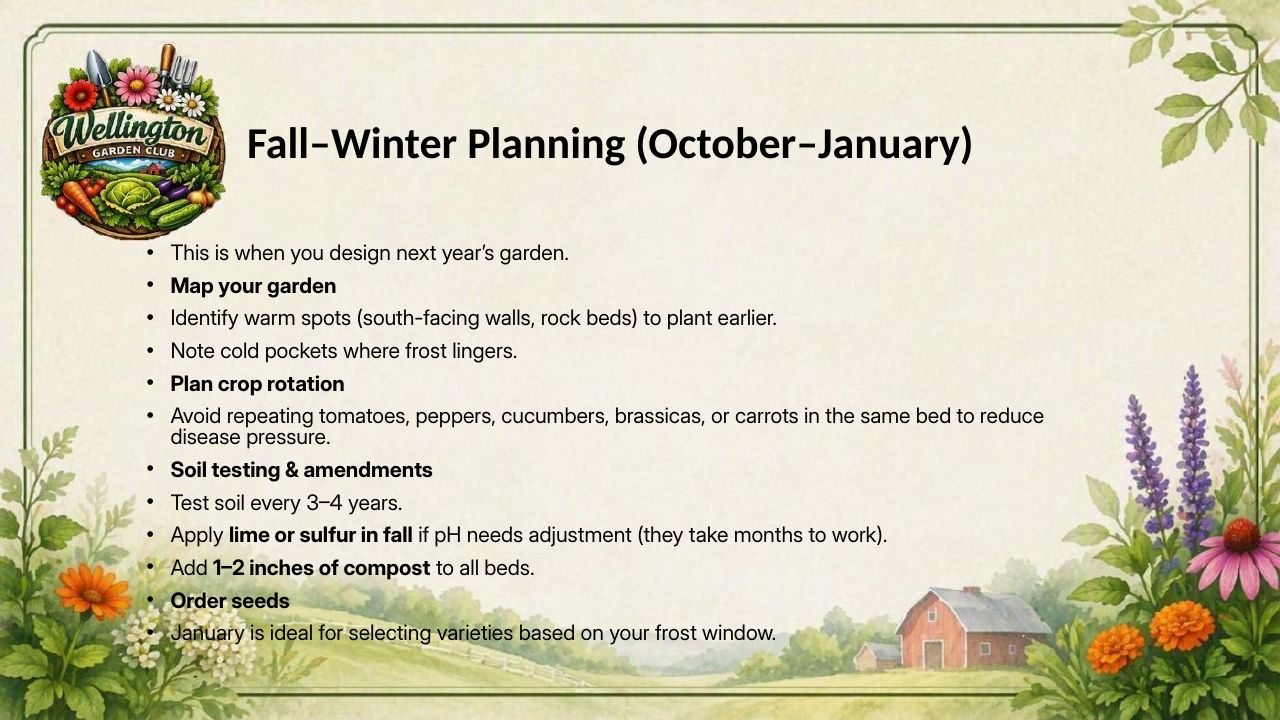
  • Map your garden to find warm spots and frost pockets.
  • Rotate crops so tomatoes, peppers, cucumbers, brassicas and carrots don’t go in the same bed two years running.
  • Test soil every 3 to 4 years and apply lime or sulfur in fall; order seeds in January.

Read all the slides as text

Slide 1: Planning Next Year’s Garden

Wellington Garden Club Meeting

Tuesday, Nov. 17th, 2026

Slide 2: Know Your Zone 6a Conditions

Last spring frost: ~April 15–28

First fall frost: ~October 8–20

Growing season: ~150–180 days (varies slightly by microclimate)

Winter lows: –10°F to –5°F (determines perennial survival)

What this means for your planning:

You can run three full garden phases: spring cool‑season,

summer warm‑season, and fall crops.

Nearly all common vegetables, herbs, and many fruits thrive here.

Soil is often clay‑based loam, so compost and raised beds improve drainage

Slide 3: October-November 2026

Plant

Garlic (ideal planting time)

Tulips, daffodils, alliums, crocus

Peonies

Hardy perennials

Garden Tasks

Soil test beds

Add compost and shredded leaves

Mulch perennial borders

Sketch next year's garden layout

Order seeds early, especially specialty lisianthus varieties

Slide 4: Fall–Winter Planning (October–January)

This is when you design next year’s garden.

Map your garden

Identify warm spots (south-facing walls, rock beds) to plant earlier.

Note cold pockets where frost lingers.

Plan crop rotation

Avoid repeating tomatoes, peppers, cucumbers, brassicas, or carrots in the same bed to reduce disease pressure.

Soil testing & amendments

Test soil every 3–4 years.

Apply lime or sulfur in fall if pH needs adjustment (they take months to work).

Add 1–2 inches of compost to all beds.

Order seeds

January is ideal for selecting varieties based on your frost window.

Download the slides