Closing Your Summer Garden

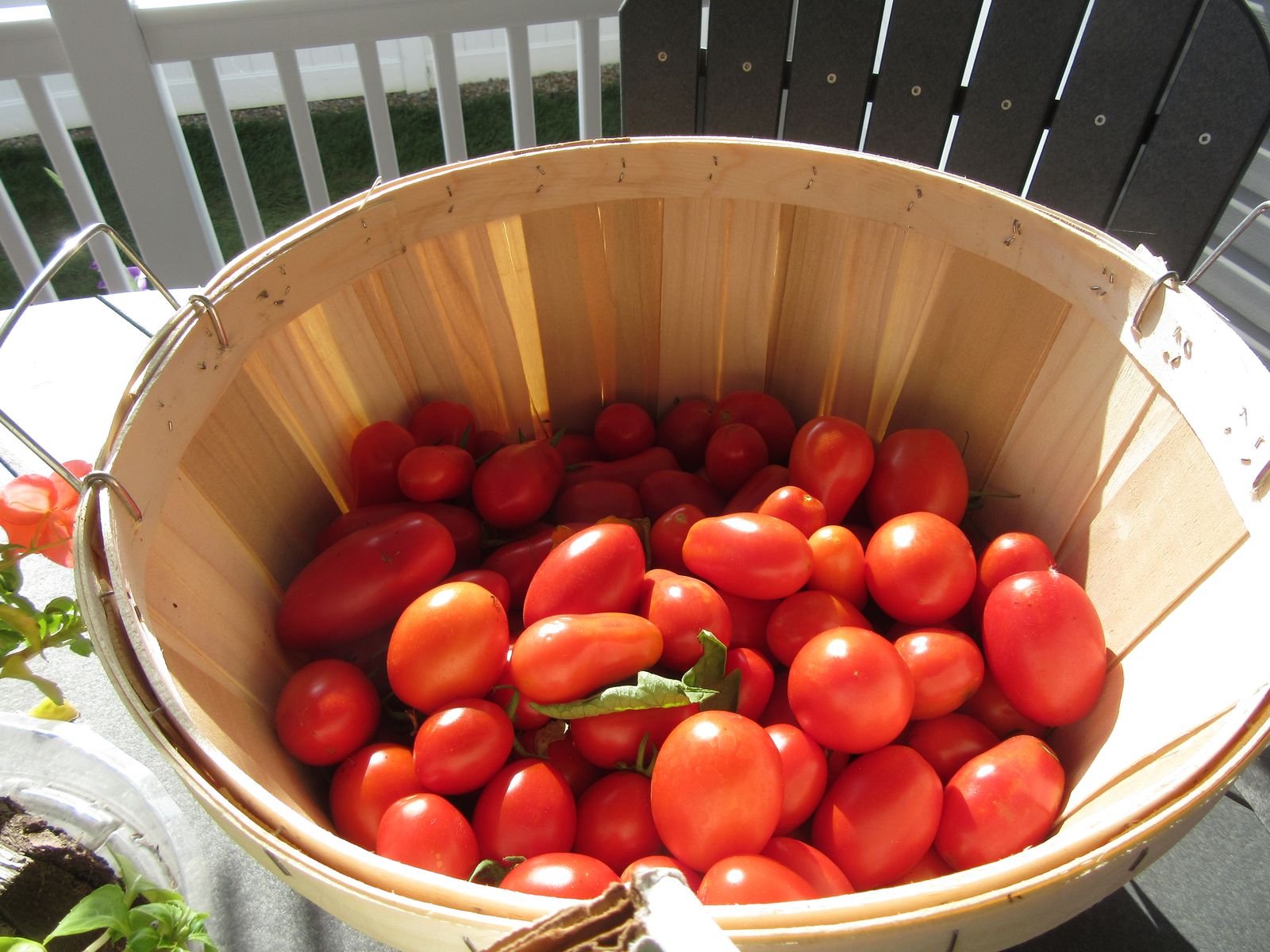
Vegetables grown by a Wellington Garden Club member

Presented at the September 22, 2026 meeting: a step-by-step guide to shutting down the summer garden in our Zone 6a climate so beds come back healthy in spring.
Closing Your Summer Garden slide 1
Closing Your Summer Garden slide 1Closing Your Summer Garden slide 2Closing Your Summer Garden slide 3Closing Your Summer Garden slide 4Closing Your Summer Garden slide 5Closing Your Summer Garden slide 6Closing Your Summer Garden slide 7Closing Your Summer Garden slide 8Closing Your Summer Garden slide 9Closing Your Summer Garden slide 10Closing Your Summer Garden slide 11

Key points

  • Know your frost window: first frost usually comes mid to late October, and cleanup should finish before the ground freezes hard in early November.
  • Remove spent and diseased plants first, and keep diseased foliage out of the compost pile.
  • Harvest and preserve what you can, and save seed from your best heirloom plants.
  • Fast fall crops like lettuce, spinach, radishes and turnips can still mature before shutdown if you count back from the frost date.
  • Add compost, plant garlic or a cover crop (crimson clover, winter rye, oats, hairy vetch), and avoid leaving soil bare.
  • Mulch 2 to 4 inches deep, but wait until the ground starts to freeze so you don’t create vole habitat.

Read all the slides as text

Slide 1: Closing your Summer Garden

Wellington Garden Club Meeting

Sept. 22nd, 2026

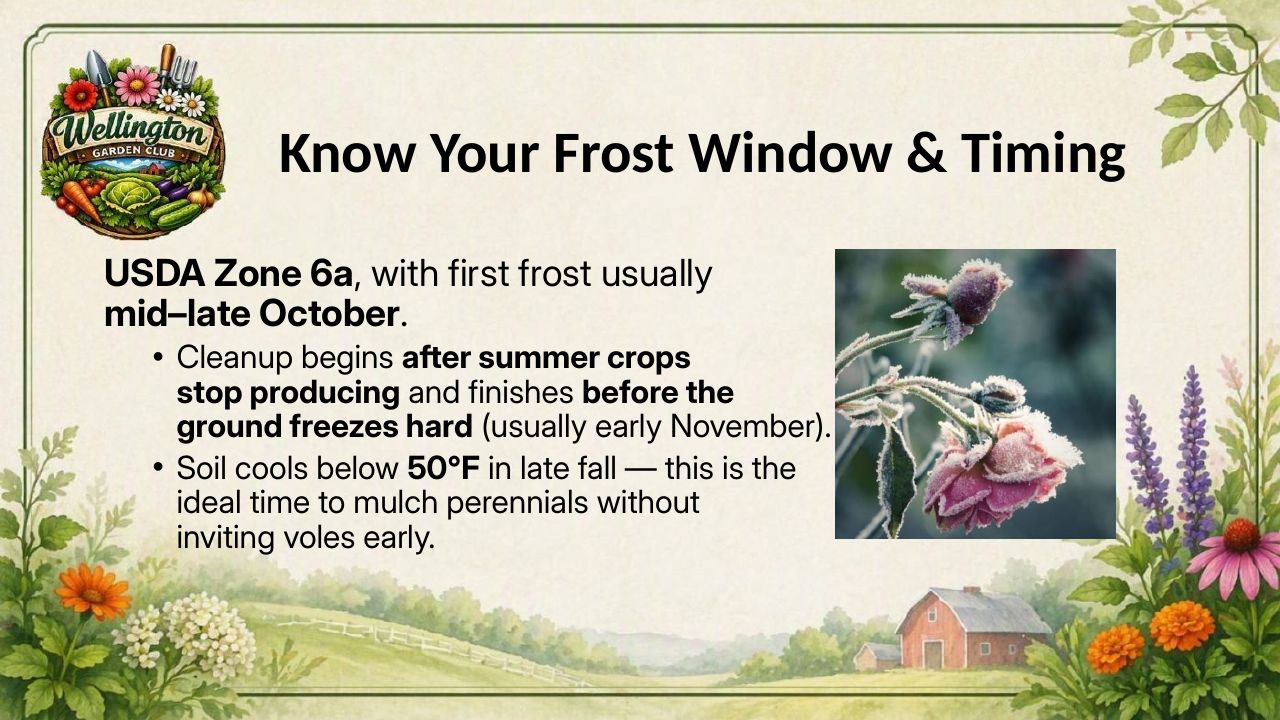
Slide 2: Know Your Frost Window & Timing

USDA Zone 6a, with first frost usually

mid–late October.

Cleanup begins after summer crops

stop producing and finishes before the

ground freezes hard (usually early November).

Soil cools below 50°F in late fall — this is the

ideal time to mulch perennials without

inviting voles early.

Slide 3: Remove Spent & Diseased Plants First

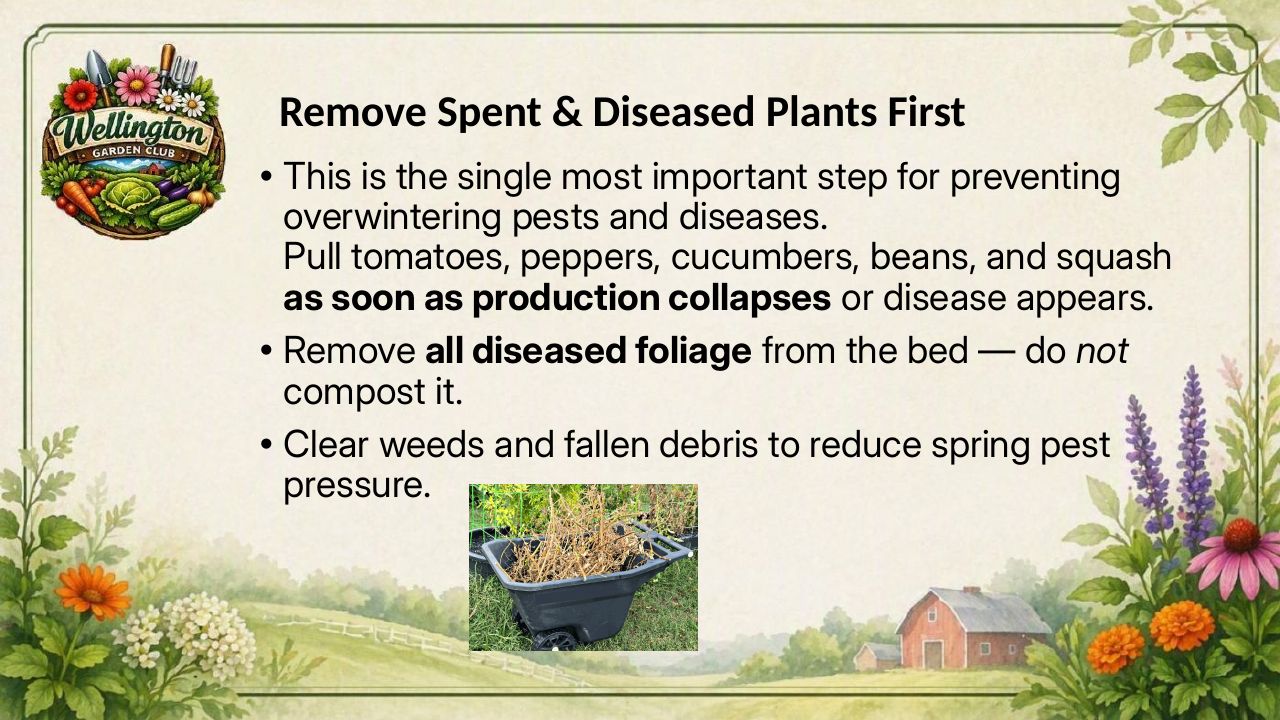
This is the single most important step for preventing overwintering pests and diseases.

Pull tomatoes, peppers, cucumbers, beans, and squash as soon as production collapses or disease appears.

Remove all diseased foliage from the bed — do not compost it.

Clear weeds and fallen debris to reduce spring pest pressure.

Slide 4: Harvest & Preserve Everything You Can

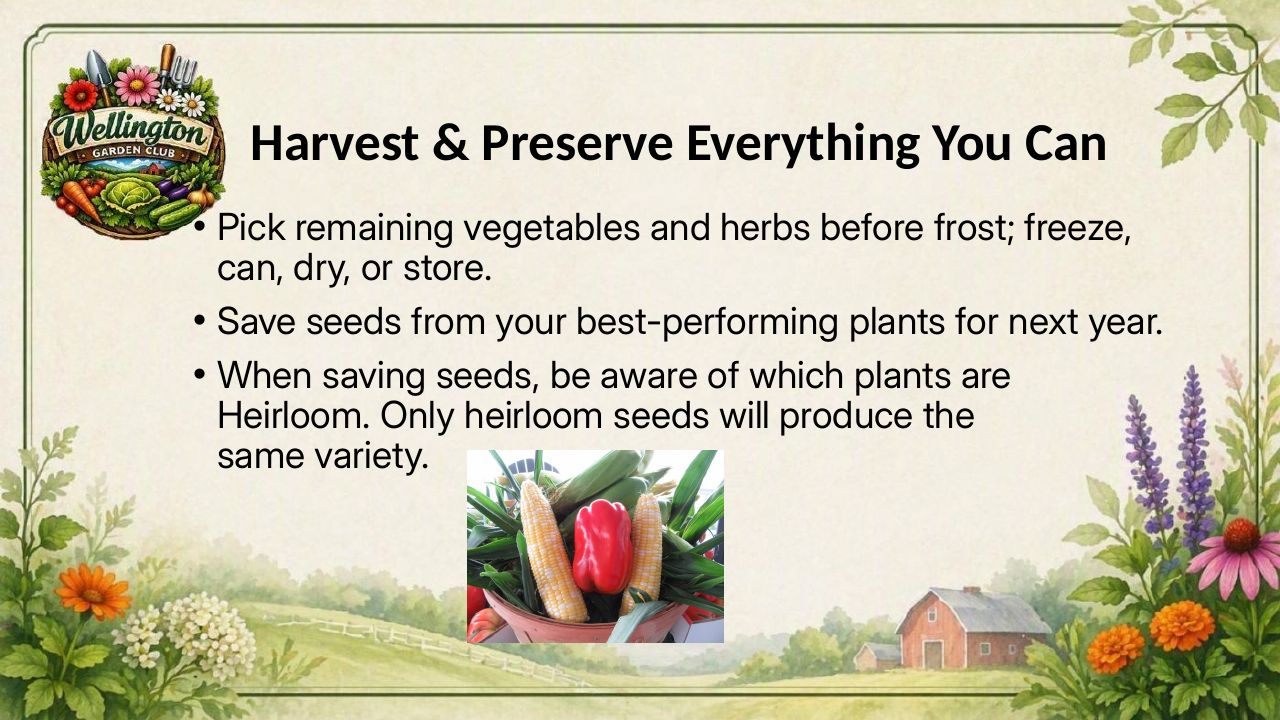
Pick remaining vegetables and herbs before frost; freeze, can, dry, or store.

Save seeds from your best-performing plants for next year.

When saving seeds, be aware of which plants are

Heirloom. Only heirloom seeds will produce the

same variety.

Slide 5: Replant Fast Fall Crops (Optional but Highly Useful)

If you want a “second act” before shutdown:

Lettuce, spinach, arugula, radishes, mustard greens mature in 30–50 days.

Radishes can finish in 25 days; carrots, beets, turnips in 50–70 days and tolerate frost.

Count backward from your frost date (around Oct 21 for Zone 6).

Slide 6: Add Compost & Reset the Soil

After removing crops:

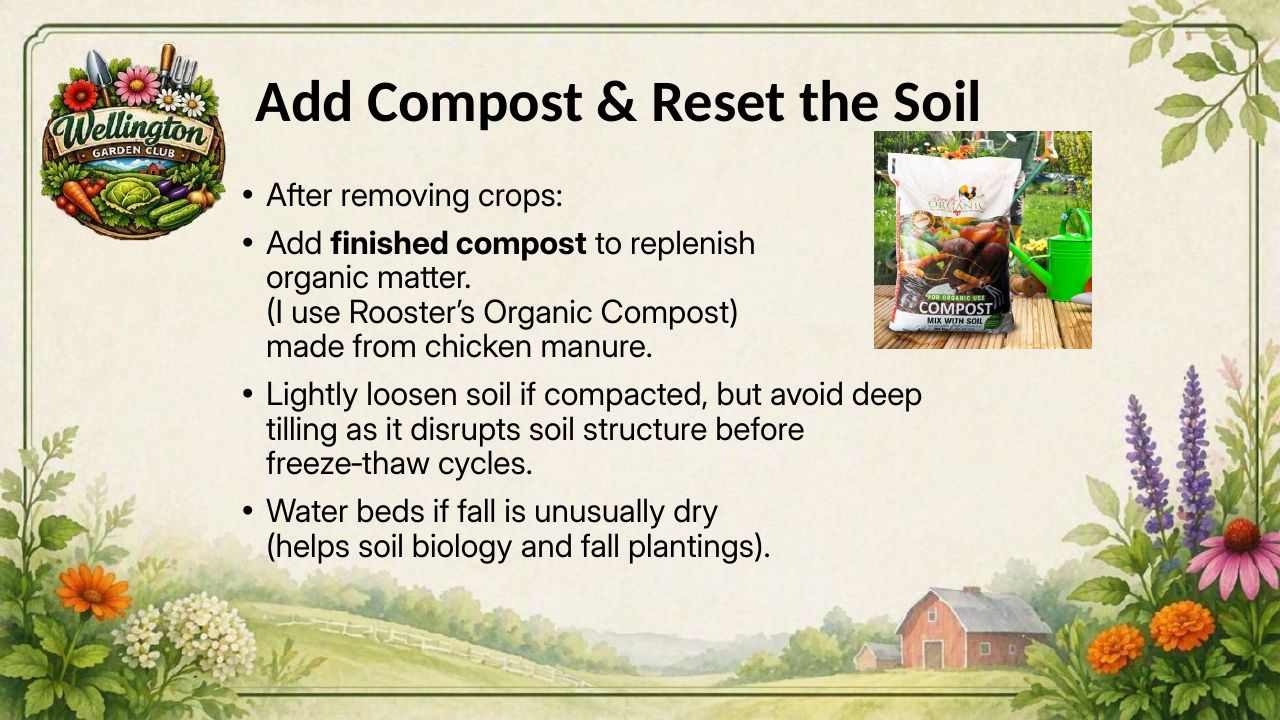
Add finished compost to replenish

organic matter.

(I use Rooster’s Organic Compost)

made from chicken manure.

Lightly loosen soil if compacted, but avoid deep

tilling as it disrupts soil structure before

freeze‑thaw cycles.

Water beds if fall is unusually dry

(helps soil biology and fall plantings).

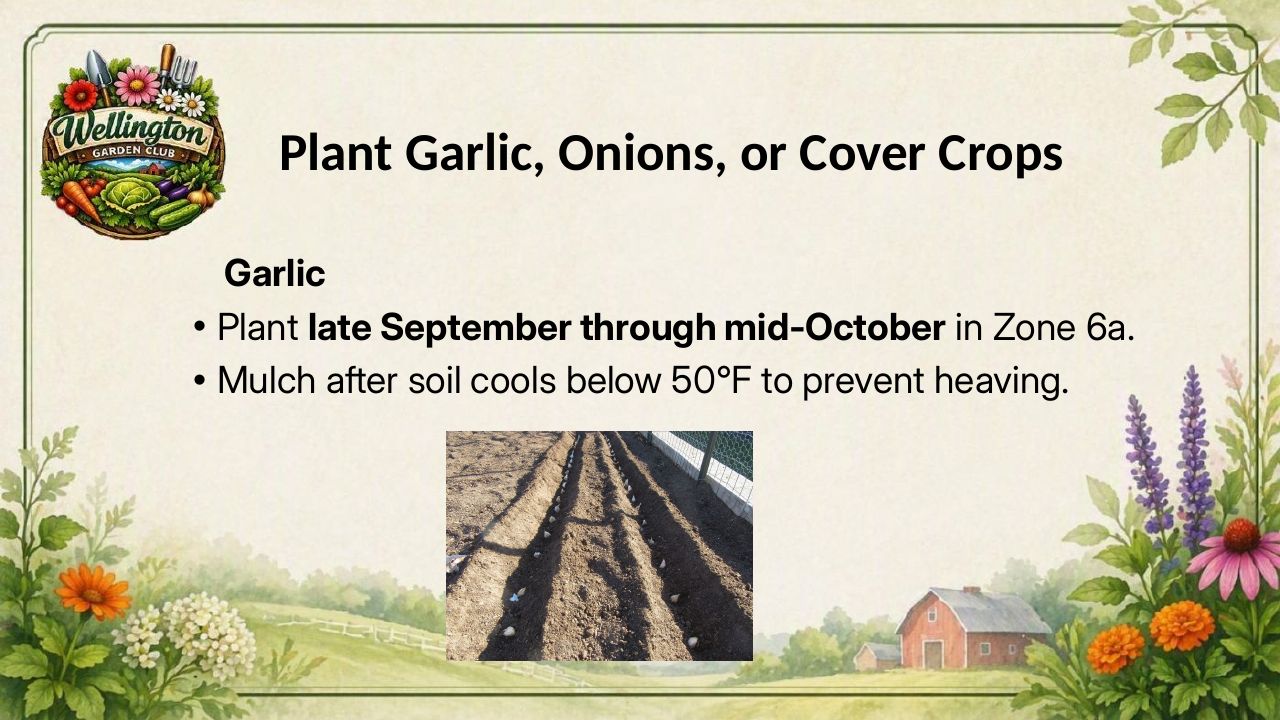
Slide 7: Plant Garlic, Onions, or Cover Crops

Garlic

Plant late September through mid‑October in Zone 6a.

Mulch after soil cools below 50°F to prevent heaving.

Slide 8: Cover Crops

Best sown September–early October so they establish before cold.

Good choices for small gardens: crimson clover, winter rye, oats, hairy vetch.

Cover crops protect soil from freeze‑thaw cycles, reduce compaction, and add organic matter.

Slide 9: Mulch Beds — But Not Too Early

Most beds need 2–4 inches of winter mulch.

Wait until the ground begins to freeze so you don’t create vole habitat.

Mulch perennials, garlic, and any newly planted shrubs.

Slide 10: Protect Perennials, Shrubs & Tender Plants

Newly planted shrubs need extra protection in windy, exposed yards.

Dig and store tender bulbs (dahlia, canna, elephant ear).

Bring in containers that can crack in freezing weather.

Slide 11: Leave Beds Protected, Not Bare

Bare soil suffers from:

freeze‑thaw heaving

erosion

nutrient loss

weed seed colonization

Mulch or cover crops prevent all of these

Download the slides