Seed Stratification

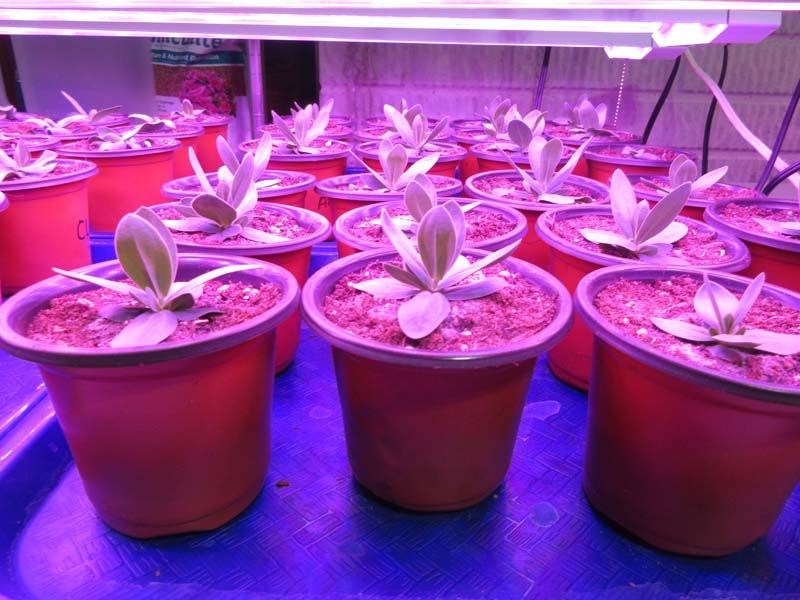
Flowers grown by a Wellington Garden Club member

Coming up at our December 15, 2026 meeting: what seed stratification is, which seeds need it, and how to do it at home. The slides are below if you’d like a preview.
Seed Stratification slide 1
Seed Stratification slide 1Seed Stratification slide 2Seed Stratification slide 3Seed Stratification slide 4Seed Stratification slide 5Seed Stratification slide 6Seed Stratification slide 7Seed Stratification slide 8Seed Stratification slide 9Seed Stratification slide 10Seed Stratification slide 11Seed Stratification slide 12Seed Stratification slide 13Seed Stratification slide 14Seed Stratification slide 15

Key points

  • Stratification mimics natural seasons to break seed dormancy so seeds sprout at the right time.
  • Many native perennials (echinacea, rudbeckia, milkweed, penstemon, baptisia) and woody plants (viburnum, dogwood, serviceberry) need cold stratification.
  • Most need 2 to 12 weeks, depending on the species.
  • At home: mix seeds with a barely moist substrate such as vermiculite, bag and label them, and refrigerate at 34 to 41°F, checking every 1 to 2 weeks.
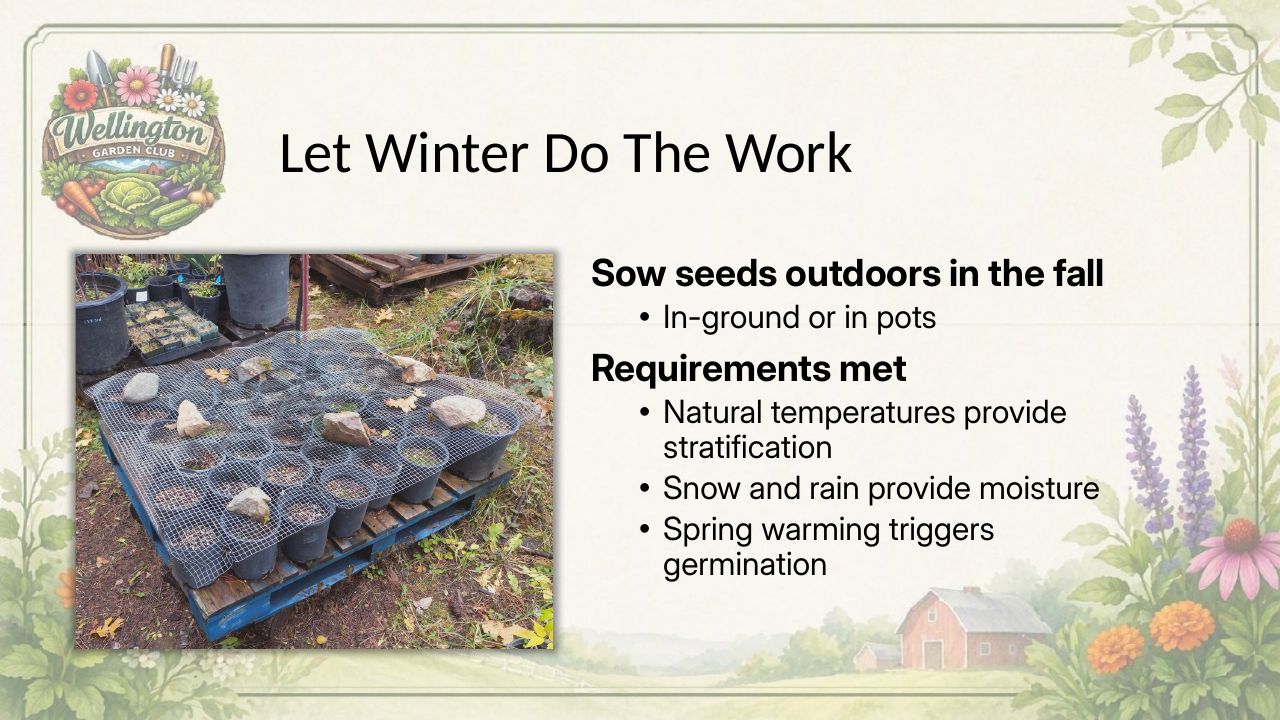
  • Or let winter do the work by sowing outdoors in fall, protecting pots from rodents and washouts.
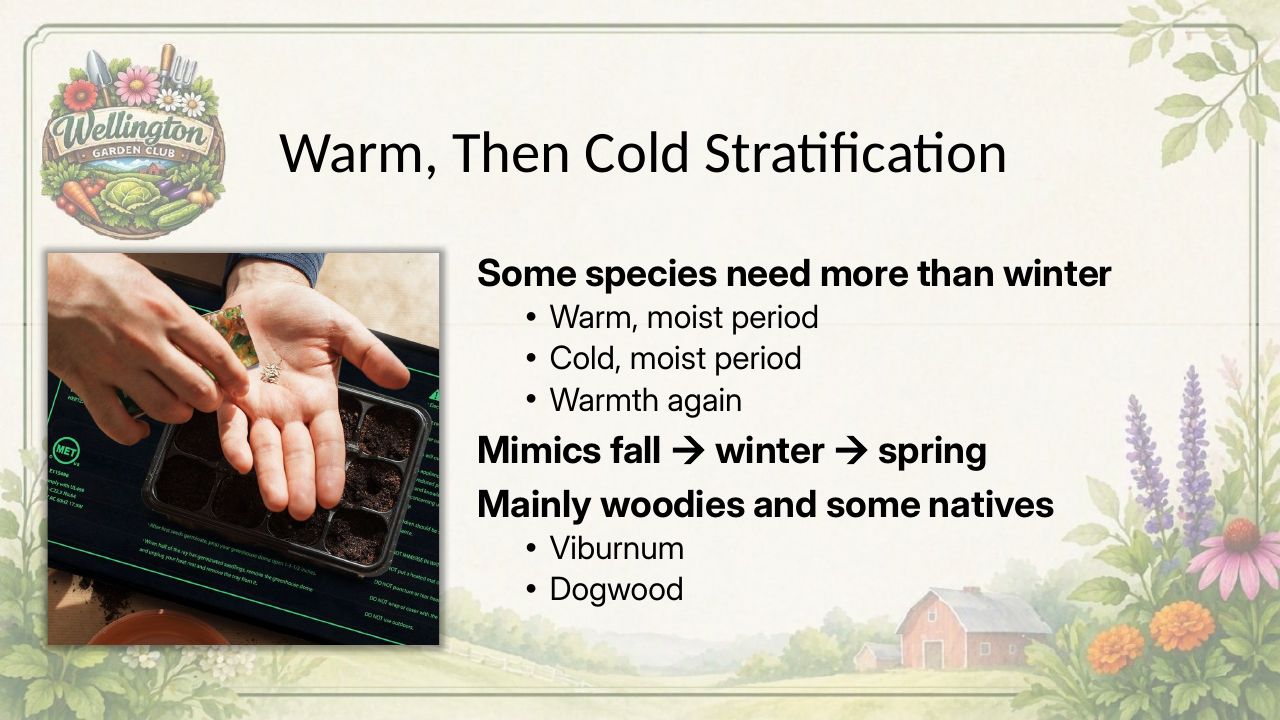
  • Some species need warm then cold stratification to mimic fall, winter and spring.

Read all the slides as text

Slide 1: Seed Stratification

Wellington Garden Club Meeting

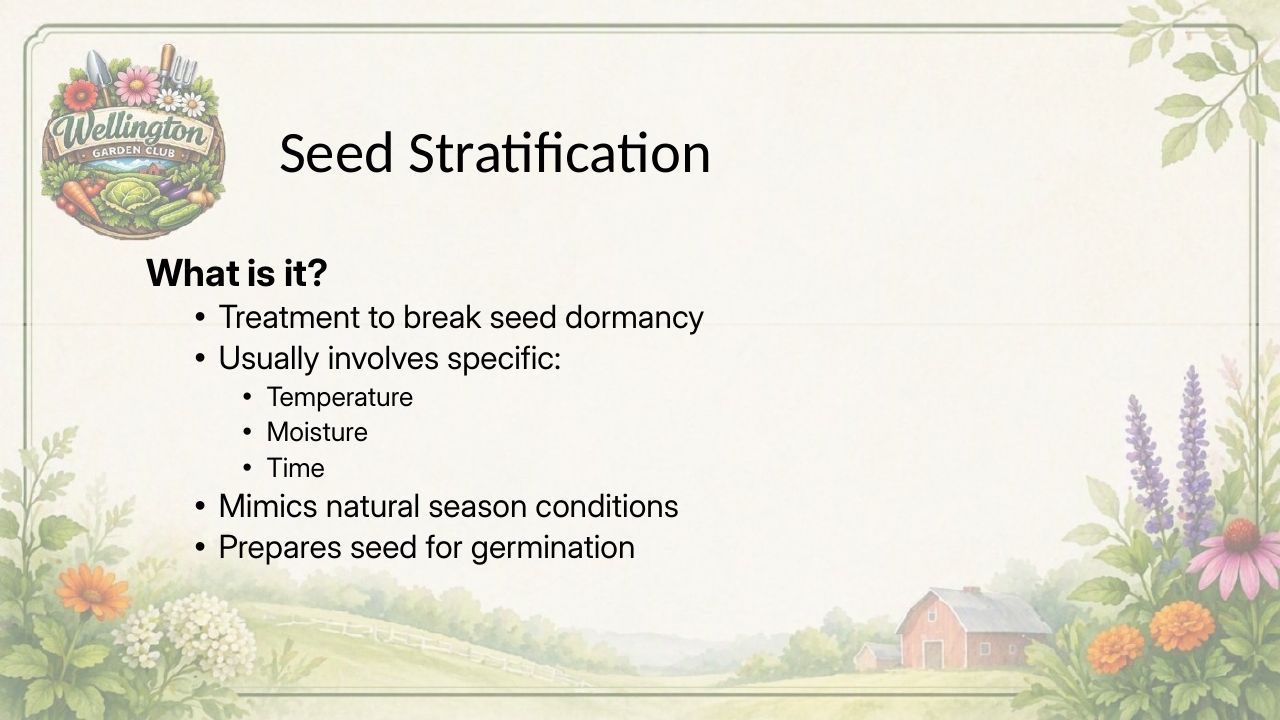
Slide 2: Seed Stratification

What is it?

Treatment to break seed dormancy

Usually involves specific:

Temperature

Moisture

Time

Mimics natural season conditions

Prepares seed for germination

Slide 3: Why Do Seeds Need It?

Prevents germination at the wrong time

Protects seedlings from winter

Dormancy must be broken before growth begins

Different species use different signals

Cold

Warmth

Sometimes light

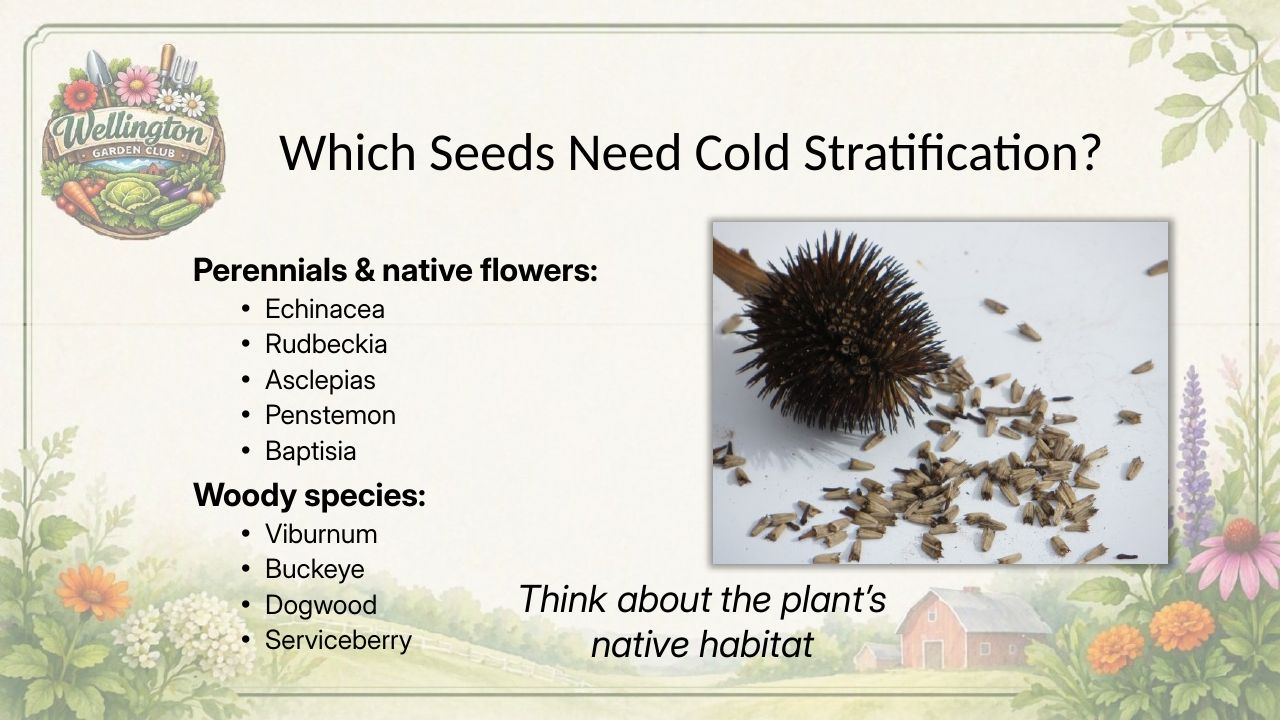
Slide 4: Which Seeds Need Cold Stratification?

Perennials & native flowers:

Echinacea

Rudbeckia

Asclepias

Penstemon

Baptisia

Woody species:

Viburnum

Buckeye

Dogwood

Serviceberry

Think about the plant’s native habitat

Slide 5: How Long Do They Need?

Depends heavily on species

Even related species vary

E.g. Bottlebrush buckeye vs yellow buckeye

Typically, 2-12 weeks

1, 2 or 3 months most common

Longer is not always better

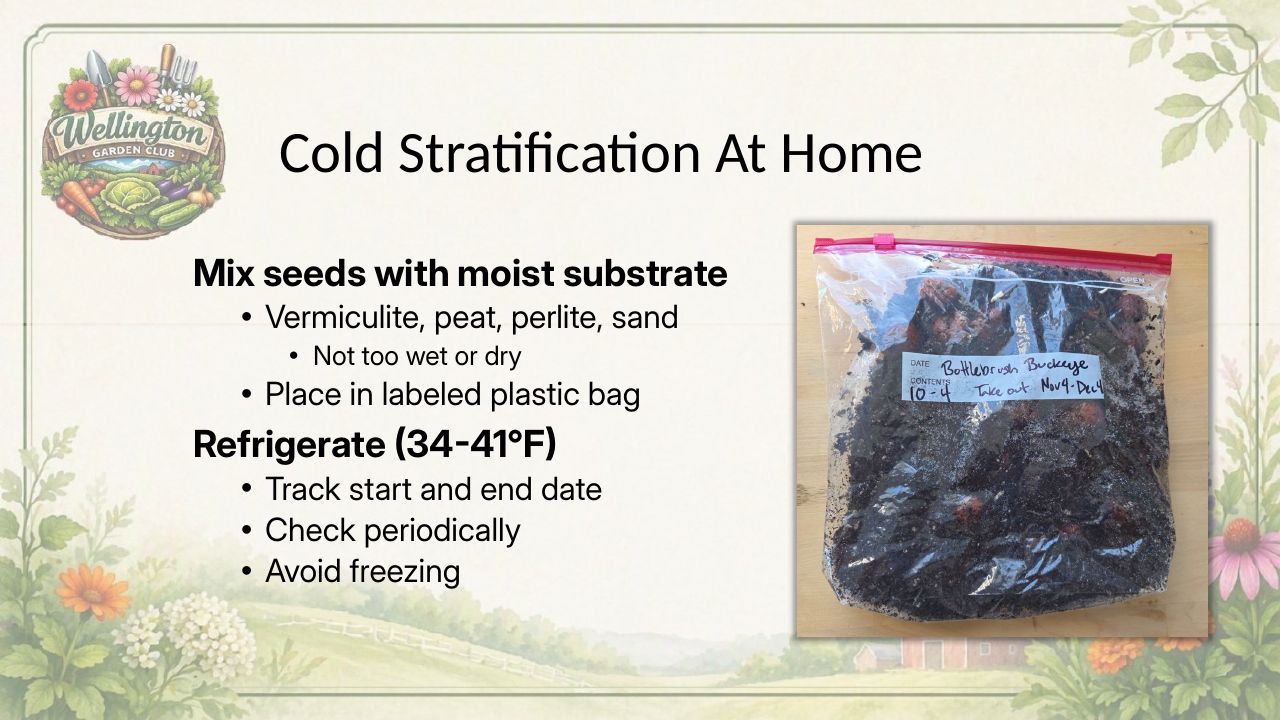
Slide 6: Cold Stratification At Home

Mix seeds with moist substrate

Vermiculite, peat, perlite, sand

Not too wet or dry

Place in labeled plastic bag

Refrigerate (34-41°F)

Track start and end date

Check periodically

Avoid freezing

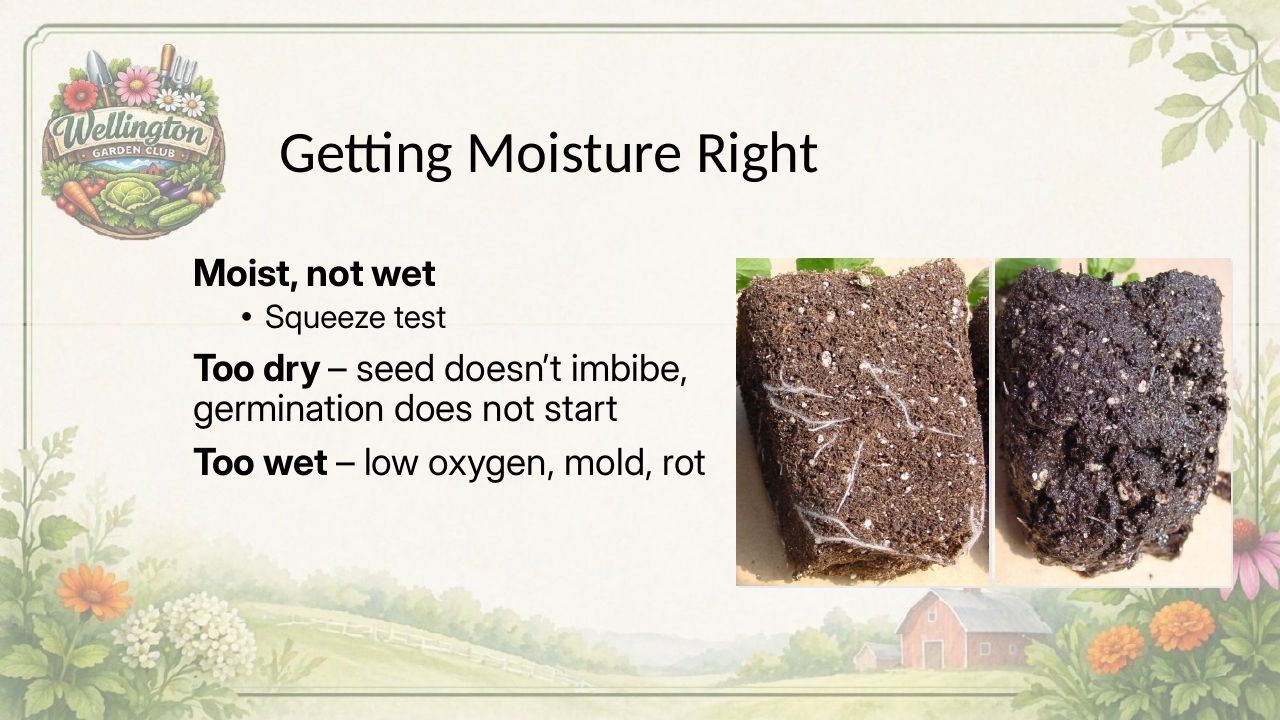
Slide 7: Getting Moisture Right

Moist, not wet

Squeeze test

Too dry – seed doesn’t imbibe, germination does not start

Too wet – low oxygen, mold, rot

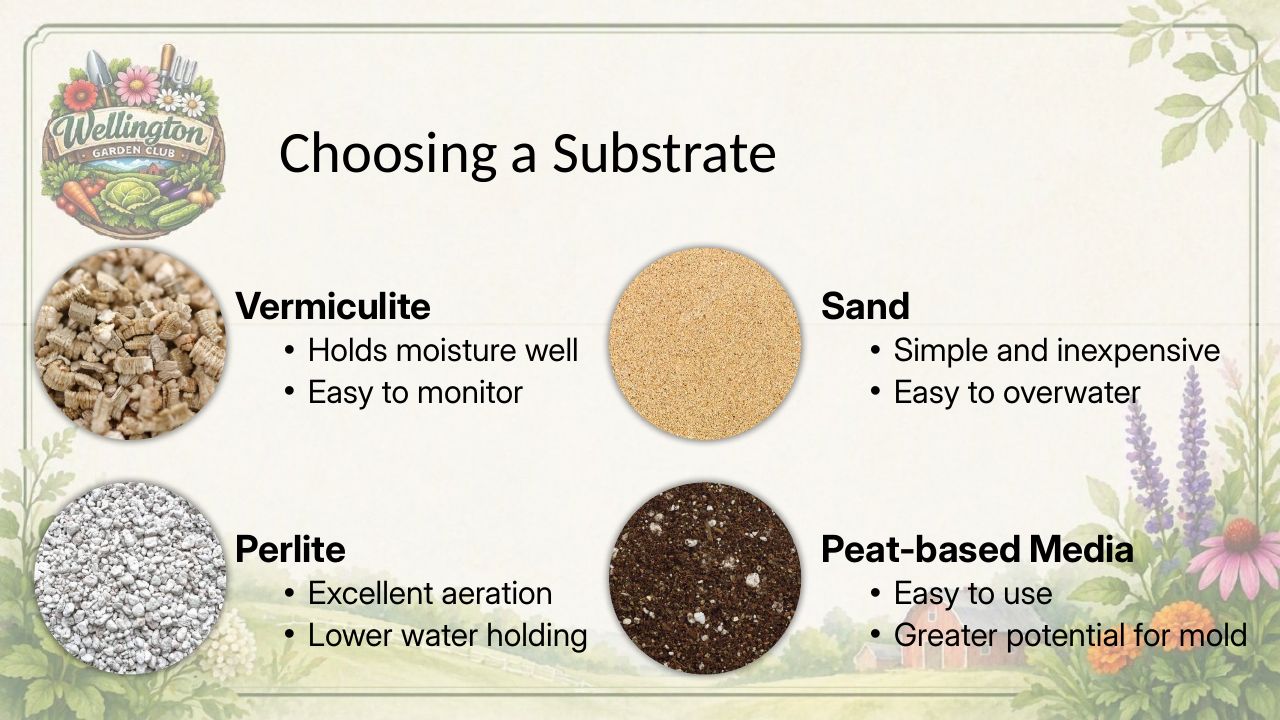
Slide 8: Choosing a Substrate

Vermiculite

Holds moisture well

Easy to monitor

Perlite

Excellent aeration

Lower water holding

Sand

Simple and inexpensive

Easy to overwater

Peat-based Media

Easy to use

Greater potential for mold

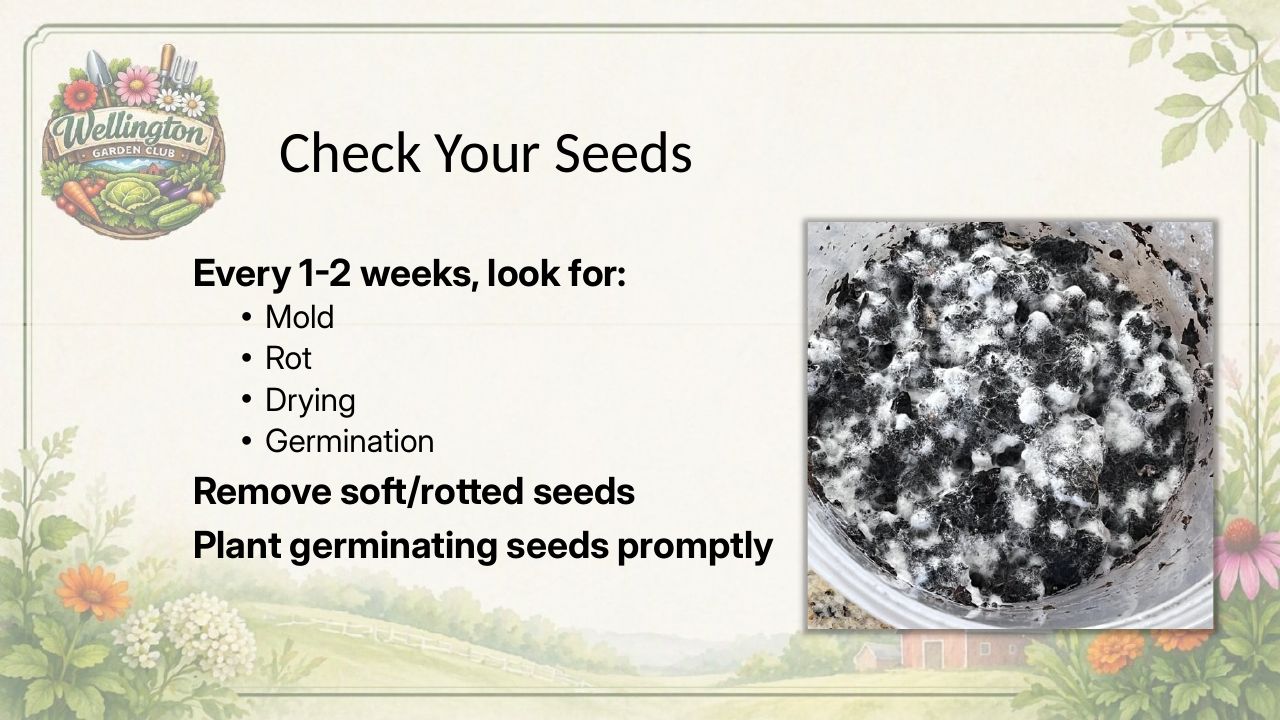
Slide 9: Check Your Seeds

Every 1-2 weeks, look for:

Mold

Rot

Drying

Germination

Remove soft/rotted seeds

Plant germinating seeds promptly

Slide 10: Let Winter Do The Work

Sow seeds outdoors in the fall

In-ground or in pots

Requirements met

Natural temperatures provide stratification

Snow and rain provide moisture

Spring warming triggers germination

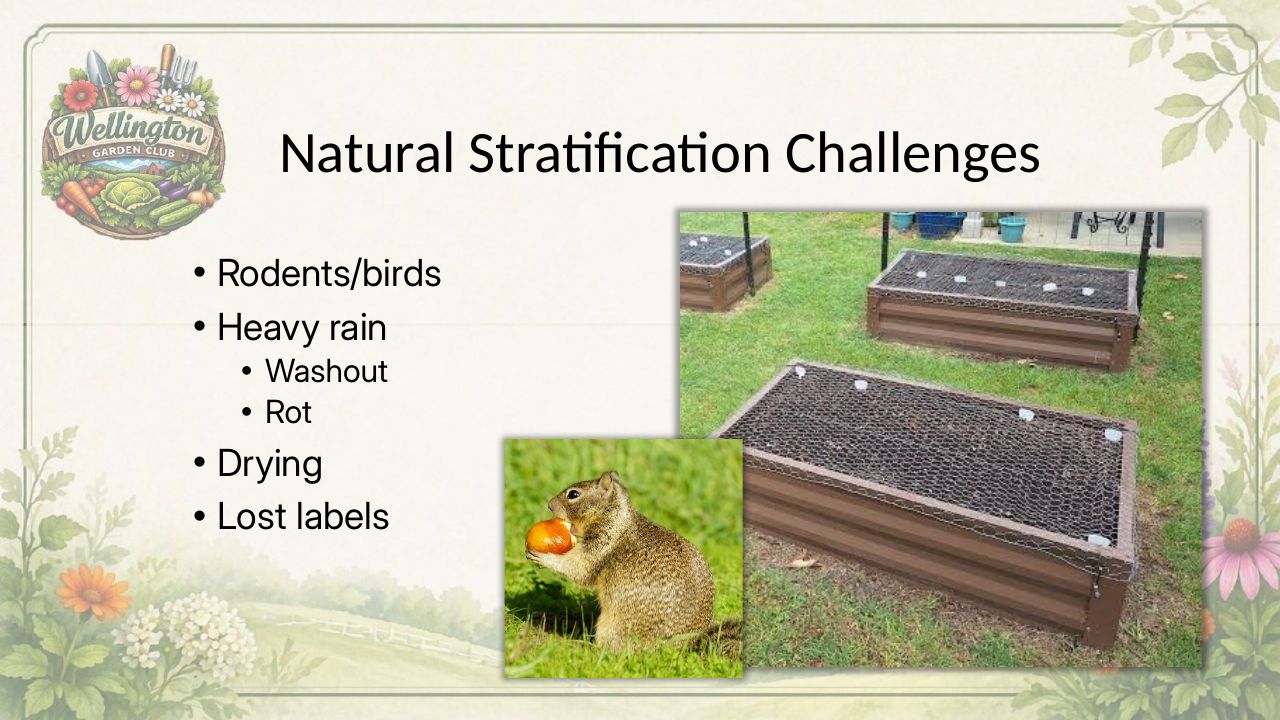
Slide 11: Natural Stratification Challenges

Rodents/birds

Heavy rain

Washout

Rot

Drying

Lost labels

Slide 12: Warm, Then Cold Stratification

Some species need more than winter

Warm, moist period

Cold, moist period

Warmth again

Mimics fall → winter → spring

Mainly woodies and some natives

Viburnum

Dogwood

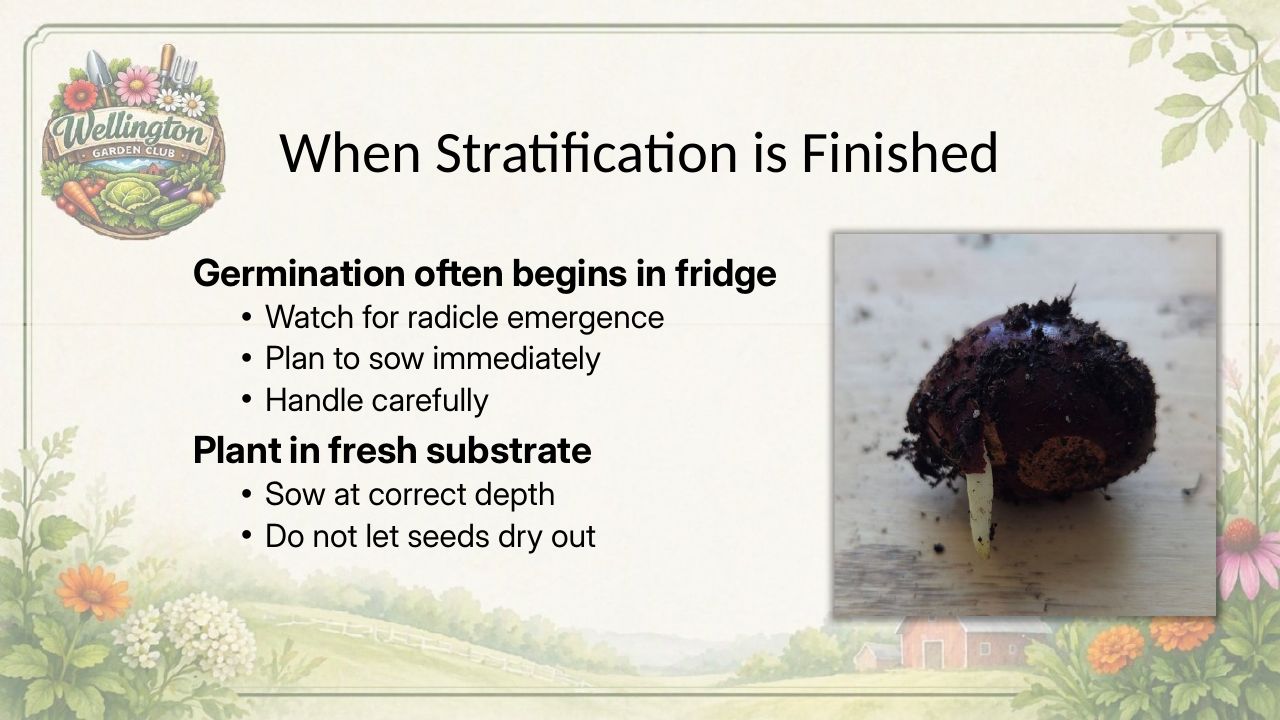
Slide 13: When Stratification is Finished

Germination often begins in fridge

Watch for radicle emergence

Plan to sow immediately

Handle carefully

Plant in fresh substrate

Sow at correct depth

Do not let seeds dry out

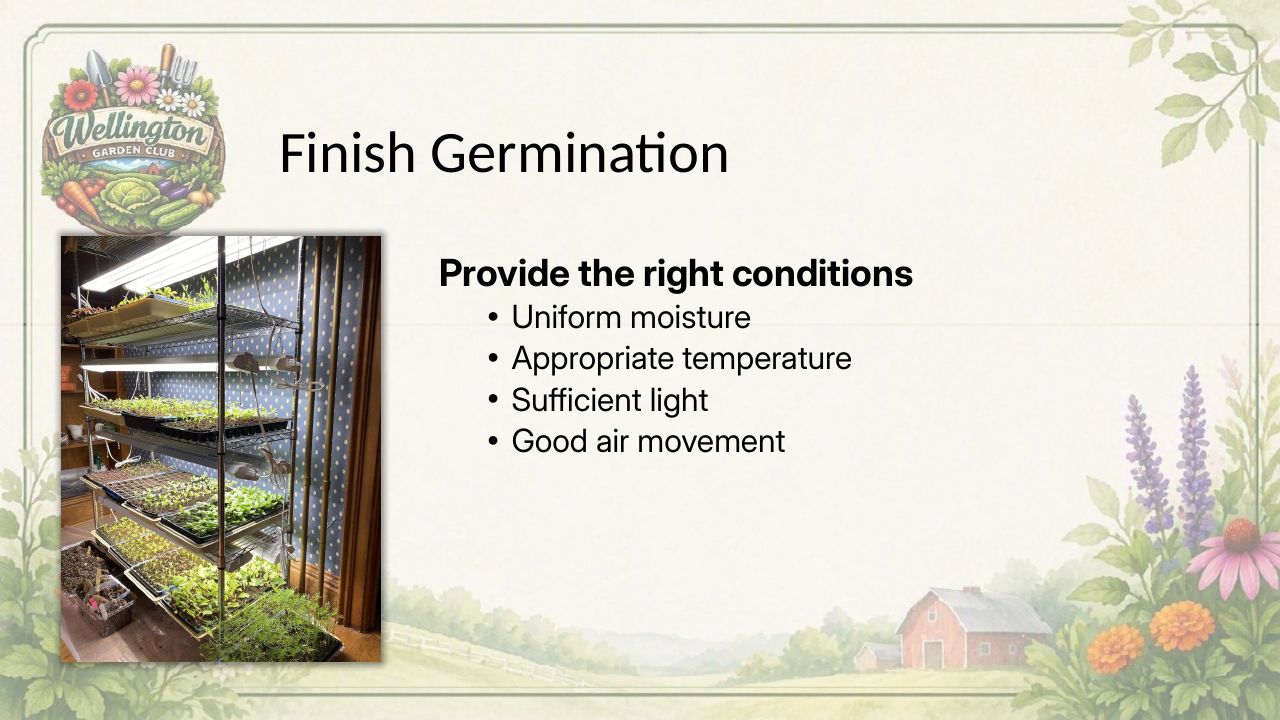
Slide 14: Finish Germination

Provide the right conditions

Uniform moisture

Appropriate temperature

Sufficient light

Good air movement

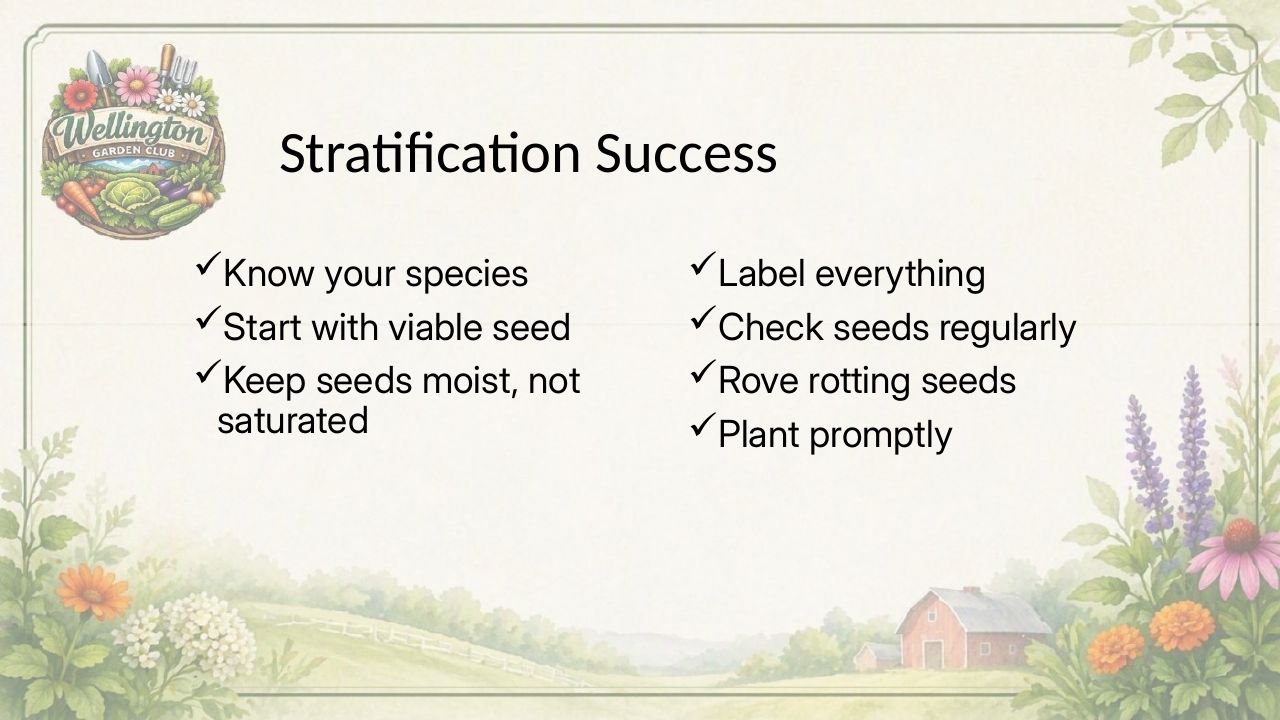
Slide 15: Stratification Success

Know your species

Start with viable seed

Keep seeds moist, not saturated

Label everything

Check seeds regularly

Remove rotting seeds

Plant promptly

Download the slides